Introduction: Why ETF Investing Is the Smartest Move You Can Make in 2026
If you have ever wondered where to put your money and felt overwhelmed by the options, you are not alone. Most people skip investing altogether because it feels too complicated. But ETF investing has changed the game completely.
An ETF, or Exchange-Traded Fund, is a basket of securities (like stocks, bonds, or commodities) that you can buy and sell on a stock exchange just like a single stock. It gives you instant diversification without the complexity of picking individual stocks. That is the core idea behind ETF investing, and it is why millions of people around the world now rely on ETFs to grow their wealth.
This ETF investing guide will walk you through everything you need. You will learn how ETFs work, how they compare to mutual funds, what the real benefits and risks are, and exactly how to get started. Whether you are a complete beginner or someone looking to sharpen your strategy, this guide covers it all.
What Is an ETF? A Simple Explanation
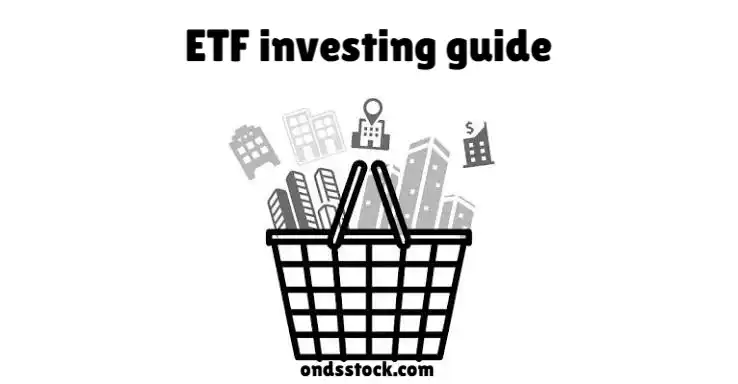
An ETF is a fund that holds a collection of assets such as stocks, bonds, gold, or real estate investment trusts. When you buy one share of an ETF, you automatically own a small piece of every asset inside that fund.
Think of it this way. Imagine a fruit basket that holds apples, oranges, bananas, and grapes. When you buy that basket, you get a little of everything without buying each fruit separately. That is exactly how ETF investing works.
ETFs trade on major stock exchanges like the New York Stock Exchange (NYSE) and NASDAQ throughout the trading day. Their prices move up and down in real time, just like individual stocks.
Real-World Examples of Popular ETFs
Here are some widely recognized ETFs that beginners and experienced investors rely on:
- SPY (SPDR S&P 500 ETF Trust): Tracks the S&P 500 index. One of the most traded ETFs in the world.
- QQQ (Invesco QQQ Trust): Follows the NASDAQ-100 index, which is heavy on technology companies.
- VTI (Vanguard Total Stock Market ETF): Covers the entire US stock market in one fund.
- BND (Vanguard Total Bond Market ETF): Focuses on US investment-grade bonds.
- GLD (SPDR Gold Shares): Tracks the price of gold without you needing to own physical gold.
These ETFs give you a clear picture of how ETF investing can fit into almost any financial goal, whether you want growth, income, or stability.
How Does ETF Investing Work?
When a fund company creates an ETF, it buys the underlying assets (such as all 500 stocks in the S&P 500) and then issues shares of the ETF to investors. You buy those shares through your brokerage account.
Here is the simple process:
- You open a brokerage account (like Fidelity, Charles Schwab, or Robinhood).
- You search for an ETF by its ticker symbol (for example, SPY or VTI).
- You place a buy order for as many shares as you want.
- Your money is now spread across every asset inside that ETF.
ETF investing is that straightforward. You do not need a financial advisor to get started. You do not need a large sum of money. You just need a brokerage account and a clear goal.
Key Benefits of ETF Investing
ETF investing offers several powerful advantages. Let me break them down one by one.
1. Diversification Made Easy
When you invest in a single stock, your money depends on one company. If that company struggles, you lose. ETF investing protects you by spreading your money across dozens, hundreds, or even thousands of assets. This is diversification, and it significantly reduces your risk.
2. Low Expense Ratios
Expense ratio is the annual fee a fund charges you to manage your investment. Most actively managed mutual funds charge 1% or more per year. Many ETFs charge as little as 0.03% to 0.20% per year. That difference compounds dramatically over time.
For example, if you invest $10,000 over 30 years with a 7% annual return:
- With a 1% fee: You end up with roughly $57,000.
- With a 0.03% fee: You end up with roughly $76,000.
That is a difference of nearly $19,000, just from the expense ratio.
3. High Liquidity
Unlike mutual funds, which are priced once per day after the market closes, ETFs trade throughout the day. This means you can buy or sell your ETF position at any moment during market hours. This liquidity gives you flexibility and control over your investments.
4. Tax Efficiency
ETF investing is more tax-efficient than mutual fund investing. Because of how ETFs are structured, they generate fewer taxable events each year. This means you pay less in capital gains taxes while your money keeps growing. For long-term investors, this tax efficiency adds up to significant savings.
5. Transparency
Most ETFs publish their holdings daily. You always know exactly what assets are inside your fund. This level of transparency is rare in the investment world and builds confidence for beginner investors.
ETFs vs Mutual Funds: A Clear Comparison
Many people wonder whether ETF investing is better than putting money into mutual funds. Here is an honest side by side comparison.
| Feature | ETF Investing | Mutual Funds |
|---|---|---|
| Trading | Throughout the day | Once per day after market close |
| Minimum Investment | Price of one share (sometimes $1) | Often $500 to $3,000 minimum |
| Expense Ratio | Typically 0.03% to 0.50% | Typically 0.50% to 2.00% |
| Tax Efficiency | Higher (fewer taxable events) | Lower (more capital gains distributions) |
| Transparency | Daily holdings disclosure | Monthly or quarterly disclosure |
| Management Style | Mostly passive (index tracking) | Often actively managed |
| Flexibility | High (buy/sell anytime) | Low (end of day transactions only) |
| Best For | Cost-conscious, flexible investors | Investors with automatic investing plans |
The verdict is clear for most beginners. ETF investing wins on cost, flexibility, and simplicity. That is why ETFs have grown faster than almost any other investment product in the past decade.
What Are the Risks of ETF Investing?
No investment is risk-free, and ETF investing is no exception. Here are the key risks you need to understand before you start.
Market Risk
When the overall market drops, your ETF will likely drop too. If your ETF tracks the S&P 500 and the market falls 30%, your investment falls with it. ETF investing does not protect you from market downturns.
Tracking Error
An ETF is designed to match the performance of an index. But sometimes it does not track perfectly due to fees and other factors. This small gap is called tracking error. Most major ETFs keep this very low, but it is something to watch.
source: jpmorgan.com
Liquidity Risk for Niche ETFs
Popular ETFs like SPY or VTI are extremely liquid. But some specialized ETFs (like those tracking obscure commodities or small markets) may have low trading volume. This can make it harder to buy or sell quickly at a fair price.
Overconcentration
Some ETFs are more concentrated than they appear. For example, a technology-focused ETF may have 30% of its weight in just two or three companies. Always review what is inside your ETF before you invest.
Currency Risk for International ETFs
If you invest in an international ETF, your returns are affected by currency exchange rates. A strong US dollar can reduce your gains from foreign markets even if those markets perform well.
How Much Money Do You Need to Start ETF Investing?
This is one of the most common questions beginners ask, and the answer is surprisingly encouraging.
You can start ETF investing with as little as $1 if your brokerage supports fractional shares. Platforms like Fidelity and Charles Schwab now allow you to buy a fraction of an ETF share. So if an ETF costs $400 per share, you can start with just $50 and own 12.5% of one share.
For most major ETFs, a single share costs between $50 and $500. Here is a simple breakdown:
- Bare minimum: $1 to $10 (with fractional shares)
- Comfortable starting point: $100 to $500
- Ideal for building a solid foundation: $1,000 and above
The most important thing is to start. Time in the market beats timing the market every single time. Even small amounts invested consistently through ETF investing can grow significantly over years thanks to compound growth.
How Beginners Can Start ETF Investing: Step by Step
Starting your ETF investing journey is simpler than most people think. Follow these steps.
Step 1: Define Your Goal
Are you saving for retirement? A house down payment? Your child’s education? Your goal determines which ETFs make sense for you. Long-term goals favor growth-oriented ETFs. Short-term goals may call for bond ETFs or more stable options.
Step 2: Choose a Brokerage
Pick a reputable brokerage that offers commission-free ETF trading. Good options include Fidelity, Charles Schwab, Vanguard, and Interactive Brokers. Look for a platform that is easy to use and supports fractional shares.
Step 3: Research ETFs
Look at the ETF’s expense ratio, index it tracks, top holdings, and past performance. Past performance does not guarantee future results, but it gives you context. Focus on low-cost, broadly diversified ETFs as a beginner.
Step 4: Start Small and Stay Consistent
You do not need to invest a large lump sum right away. Start with what you can afford and invest consistently every month. This strategy is called dollar-cost averaging, and it reduces the impact of market volatility over time.
Step 5: Review and Rebalance Periodically
ETF investing is not a set-it-and-forget-it approach forever. Check your portfolio every few months. If one ETF has grown much larger than the others, rebalance by buying more of the underperforming ones to maintain your target allocation.
Understanding Expense Ratios, Diversification, Liquidity, and Tax Efficiency
These four concepts are central to smart ETF investing. Here is a quick summary of each.
Expense Ratio: The annual cost of owning an ETF, expressed as a percentage of your investment. Always choose ETFs with expense ratios below 0.50% when possible.
Diversification: Spreading your money across many assets to reduce risk. ETF investing gives you automatic diversification in a single trade.
Liquidity: The ease with which you can buy or sell an ETF. Higher trading volume equals higher liquidity. Stick to well-known ETFs for the best liquidity.
Tax Efficiency: ETFs rarely distribute capital gains to investors, which means fewer taxable events compared to mutual funds. This makes ETF investing especially attractive for taxable accounts.
Conclusion: Your ETF Investing Journey Starts Now
ETF investing is one of the most accessible, affordable, and effective ways to build long-term wealth in 2026. You get instant diversification, low costs through minimal expense ratios, excellent liquidity, and strong tax efficiency all in one simple product.
You do not need to be rich to start. You do not need a financial degree. You just need a clear goal, a brokerage account, and the discipline to invest consistently over time.
The best time to start ETF investing was yesterday. The second best time is today. What is your first step going to be?
Frequently Asked Questions (FAQs)
Q1: What is an ETF in simple terms? An ETF is a fund you can buy on a stock exchange that holds a collection of assets like stocks or bonds. ETF investing gives you instant diversification in one purchase.
Q2: Is ETF investing good for beginners? Yes. ETF investing is ideal for beginners because it is simple, low-cost, and requires no advanced knowledge to get started.
Q3: How much does it cost to invest in an ETF? You can start ETF investing with as little as $1 using fractional shares. Most ETF shares cost between $50 and $500.
Q4: Are ETFs safer than individual stocks? ETFs are generally considered less risky than individual stocks because they are diversified. But ETF investing still carries market risk and is not completely safe.
Q5: What is the best ETF for beginners? VTI (Vanguard Total Stock Market ETF) and SPY (SPDR S&P 500 ETF Trust) are among the most recommended options for beginners starting their ETF investing journey.
Q6: How do ETFs make money for investors? ETFs make money through price appreciation (the ETF value rises) and dividends paid by the assets inside the fund. ETF investing rewards patient, long-term holders most.
Q7: Can I lose all my money in an ETF? It is extremely unlikely to lose everything in a broadly diversified ETF. However, ETF investing does carry risk, and your portfolio value will fluctuate with the market.
Q8: How often should I invest in ETFs? Many investors use a monthly dollar-cost averaging strategy for ETF investing. Consistency matters more than timing.
Q9: What is the difference between an ETF and an index fund? Most ETFs are index funds, but index funds are not always ETFs. The key difference is that ETFs trade throughout the day while traditional index mutual funds are priced once per day.
Q10: Are ETFs taxed differently than stocks? ETF investing is generally more tax-efficient than mutual funds. You typically only pay capital gains tax when you sell your ETF shares, not annually like with many mutual funds.
Author Bio
James Carter is a personal finance writer and investment educator with over a decade of experience helping everyday people understand money, markets, and long-term wealth building. He specializes in ETF investing, passive income strategies, and financial literacy for beginners. James has been featured in several financial publications and believes that smart investing should be accessible to everyone, not just Wall Street insiders.
ondsstock.com
Email: johanharwen314@gmail.com
Author Name: James Carter