
Introduction
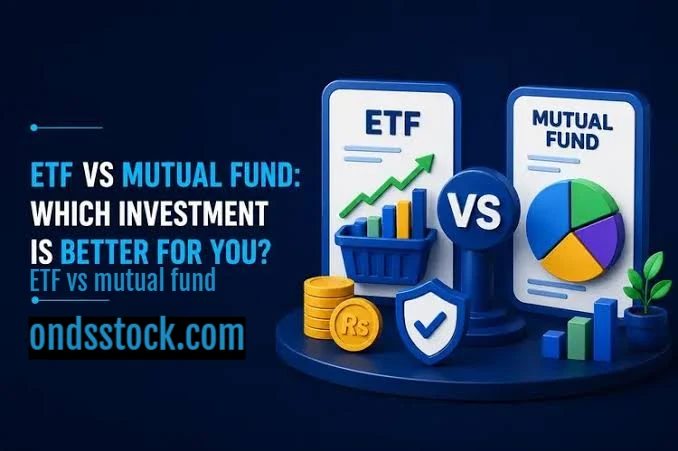
You have money to invest. You want it to grow. But then you hear two terms thrown around constantly: ETF and mutual fund. Both sound reasonable. Both promise diversification. So which one do you actually choose?
The ETF vs mutual fund debate is one of the most common questions new and experienced investors ask. And honestly, the answer is not one-size-fits-all. It depends on your goals, your tax situation, how often you want to trade, and how much you want to pay in fees.
In this article, you will get clear, honest answers. We will break down what each investment type is, how they differ, and which one might work better for your specific situation. No jargon. No confusion. Just a straightforward guide that helps you make a smarter choice.
What Is an ETF?
An ETF, or Exchange-Traded Fund, is a collection of assets — stocks, bonds, or commodities — bundled into a single fund that you can buy and sell on a stock exchange. Think of it like a basket of investments you can trade throughout the day, just like a regular stock.
ETFs typically track an index, such as the S&P 500 or the Nasdaq 100. When you buy one share of an ETF, you instantly get exposure to all the assets inside it. This makes ETFs a powerful tool for diversification without requiring a large sum of money.
Key features of ETFs:
- Trade on exchanges during market hours
- Typically lower expense ratios than mutual funds
- Highly transparent (holdings are disclosed daily)
- Minimum investment is just the price of one share
- Generally more tax-efficient than mutual funds
What Is a Mutual Fund?
A mutual fund pools money from multiple investors and uses it to buy a portfolio of stocks, bonds, or other securities. A professional fund manager handles the buying and selling decisions — especially in actively managed mutual funds.
Unlike ETFs, mutual funds are priced only once per day, after the market closes. You cannot buy or sell them during trading hours. You invest at the end-of-day Net Asset Value (NAV), not a live market price.
Key features of mutual funds:
- Priced once daily after market close
- May have minimum investment requirements (often $500 to $3,000)
- Actively or passively managed
- Less tax-efficient due to capital gains distributions
- Great for automatic, recurring investments
ETF vs Mutual Fund: Side-by-Side Comparison
| Feature | ETF | Mutual Fund |
|---|---|---|
| Trading | Throughout the day on exchanges | Once per day at NAV |
| Minimum Investment | Price of one share | Usually $500 to $3,000+ |
| Expense Ratio | Generally lower (0.03% to 0.25%) | Generally higher (0.5% to 1.5%+) |
| Tax Efficiency | More tax-efficient | Less tax-efficient |
| Management Style | Mostly passive | Active or passive |
| Transparency | Daily holdings disclosure | Monthly or quarterly disclosure |
| Automatic Investment | Less convenient | Easy to automate |
| Best For | Cost-conscious, tax-aware investors | Long-term, hands-off investors |
Are ETFs Cheaper Than Mutual Funds?
Yes, in most cases ETFs are cheaper than mutual funds — and this difference can have a major impact on your long-term returns.
The key number to look at is the expense ratio, which is the annual fee you pay as a percentage of your investment. For example, if you invest $10,000 in a fund with a 1% expense ratio, you pay $100 per year in fees. That might not sound like much, but over 20 years, it compounds significantly.
Average expense ratios:
- Passive ETFs: 0.03% to 0.20%
- Passive mutual funds: 0.10% to 0.50%
- Actively managed mutual funds: 0.50% to 1.5% or higher
Vanguard’s S&P 500 ETF (VOO), for instance, charges just 0.03% per year. Many actively managed mutual funds charge 20 to 50 times more than that.
The bottom line: if you care about keeping fees low — and you should — ETFs usually win in the ETF vs mutual fund cost comparison.
Are ETFs More Tax-Efficient Than Mutual Funds?
Yes, and this is one of the biggest advantages ETFs hold over mutual funds.
Here is why it matters. When a mutual fund manager sells securities inside the fund to meet investor redemptions or rebalance the portfolio, it triggers capital gains. Those gains get distributed to all investors — even if you never sold your shares. You end up paying taxes on gains you did not personally realize.
ETFs handle this differently. They use an “in-kind” creation and redemption process, which means they rarely trigger taxable events inside the fund. You only pay capital gains tax when you personally sell your ETF shares.
For investors in higher tax brackets or those investing in taxable (non-retirement) accounts, this tax efficiency can save a meaningful amount of money each year.
Quick rule of thumb: If you invest in a taxable brokerage account, ETFs are almost always more tax-efficient than mutual funds.
Liquidity: Which Is Easier to Buy and Sell?
ETFs are more liquid than mutual funds. You can buy or sell an ETF at any point during trading hours at the current market price. This gives you flexibility and control.
Mutual funds, on the other hand, settle at the end of the trading day at the closing NAV. If the market drops 3% during the day and you want to sell your mutual fund, you cannot act immediately. You place the order and wait for the closing price.
For most long-term investors, this difference in liquidity does not matter much. If you are investing for retirement 20 years from now, intraday trading rarely helps you. But if you want flexibility or need access to your money quickly, ETFs give you more control.
Which Is Better for Beginners: ETF or Mutual Fund?
If you are just starting out, ETFs are generally the better choice for most beginners. Here is why:
ETFs work well for beginners because:
- You can start with a small amount (even $50 to $100)
- Low expense ratios leave more money in your account
- They are easy to understand — you buy shares like a stock
- Broad market ETFs like those tracking the S&P 500 offer instant diversification
- They are tax-efficient, so you keep more of your gains
Mutual funds may suit beginners who:
- Want automatic monthly contributions without worrying about share prices
- Prefer to invest through a workplace 401(k) plan (most offer mutual funds)
- Like the idea of professional management
- Want to invest a fixed dollar amount each month (mutual funds allow fractional investments easily)
If your workplace retirement plan only offers mutual funds, those are still a solid choice — especially index mutual funds with low expense ratios. The ETF vs mutual fund question becomes most important when you are investing outside a workplace plan, in a taxable brokerage account.
source: investopedia.com
Active vs Passive: A Key Factor in the ETF vs Mutual Fund Decision
Most ETFs are passively managed. They simply track an index and do not try to beat the market. Most actively managed funds are mutual funds where a portfolio manager makes decisions about what to buy and sell.
Research consistently shows that most actively managed funds fail to outperform their benchmark index over long periods. According to the S&P SPIVA reports, more than 80% of active fund managers underperform the S&P 500 over a 15-year period.
This is a strong argument for low-cost, passive ETFs. You stop paying higher fees for management that rarely beats the market.
When to Choose a Mutual Fund Over an ETF
Mutual funds are not a bad choice. In fact, they are the right choice in several situations:
- You invest through a 401(k) or employer-sponsored plan that does not offer ETFs
- You want to automate a fixed dollar amount each month without tracking share prices
- You prefer a fund manager to make decisions for you
- You are investing in a tax-advantaged account (IRA or 401k) where tax efficiency matters less
If your 401(k) offers a low-cost index mutual fund — like a Vanguard or Fidelity index fund — that is an excellent investment. Do not overlook mutual funds just because ETFs are trending.
The Bottom Line: Which Is Better?
Neither ETFs nor mutual funds are universally better. The right choice depends on you.
Choose an ETF if you:
- Invest in a taxable brokerage account
- Want to keep fees as low as possible
- Value flexibility and intraday trading
- Are comfortable buying shares like a stock
Choose a mutual fund if you:
- Invest through a 401(k) or IRA with limited ETF options
- Want to automate a fixed monthly investment
- Prefer active management (though understand the higher cost)
- Want to invest an exact dollar amount, not just whole shares
In the ETF vs mutual fund comparison, ETFs tend to win on cost and tax efficiency. Mutual funds win on convenience for automatic investing and availability in retirement plans. The smartest investors often use both — ETFs in their taxable accounts and index mutual funds in their 401(k).
Conclusion
The ETF vs mutual fund question does not have a single right answer. Both are legitimate, powerful tools for building long-term wealth. What matters most is that you start investing, keep costs low, stay diversified, and remain consistent.
If you are starting fresh with a brokerage account, broad market ETFs are a simple, low-cost starting point. If your workplace retirement plan offers good index mutual funds, use them and invest consistently.
The best investment is the one you actually stick with. So pick the approach that fits your life, your goals, and your budget — then stay the course.
Which approach do you currently use in your own portfolio? Are you a fan of ETFs, mutual funds, or both? Start there, and build from it.
FAQs: ETF vs Mutual Fund
1. What is the main difference between an ETF and a mutual fund? An ETF trades on a stock exchange throughout the day at market prices, while a mutual fund is priced once per day at the closing NAV. ETFs generally have lower fees and are more tax-efficient.
2. Are ETFs cheaper than mutual funds? Yes, most ETFs have lower expense ratios than mutual funds, especially actively managed ones. Passive ETFs can cost as little as 0.03% per year, while actively managed mutual funds often charge 0.5% to 1.5% or more.
3. Which is better for beginners, an ETF or a mutual fund? ETFs are usually better for beginners investing in a brokerage account because of lower costs, no minimum investment beyond one share price, and easy diversification. However, mutual funds in a 401(k) are also a great option.
4. Are ETFs more tax-efficient than mutual funds? Yes. ETFs use an in-kind redemption process that rarely triggers capital gains distributions. Mutual funds can distribute taxable capital gains to investors even if they did not sell their shares.
5. Can I invest in both ETFs and mutual funds? Absolutely. Many investors use ETFs in their taxable brokerage accounts for tax efficiency and mutual funds in their 401(k) or IRA for convenience and automatic contributions.
6. Do ETFs pay dividends? Yes. Many ETFs pay dividends, which are passed on to shareholders. You can choose to receive these as cash or reinvest them automatically through a Dividend Reinvestment Plan (DRIP).
7. What is an expense ratio? An expense ratio is the annual fee a fund charges, expressed as a percentage of your investment. A 0.10% expense ratio means you pay $10 per year for every $10,000 invested.
8. Is it safe to invest in ETFs? ETFs carry the same market risk as the assets they hold. A broad market ETF tracking the S&P 500 is considered relatively low risk compared to a single stock, but all investments can lose value.
9. Can I lose money in a mutual fund? Yes. Mutual funds invest in assets that fluctuate in value. If the underlying securities lose value, your investment can decrease. However, diversified funds reduce the risk compared to individual stock picking.
10. Which is better for a long-term retirement goal? Both work well for retirement. Low-cost index ETFs and low-cost index mutual funds both grow wealth effectively over the long term. The key is to invest consistently, keep fees low, and stay invested through market ups and downs.
Author Bio
James R. Collins is a personal finance writer and investment educator with over a decade of experience helping everyday investors understand the stock market, retirement planning, and wealth-building strategies. He holds a background in economics and has contributed to multiple financial publications. James believes that smart investing does not require complexity — just consistency, low costs, and a clear understanding of the basics.
ondsstock.com
Email: johanharwen314@gmail.com
Author Name: James R. Collins