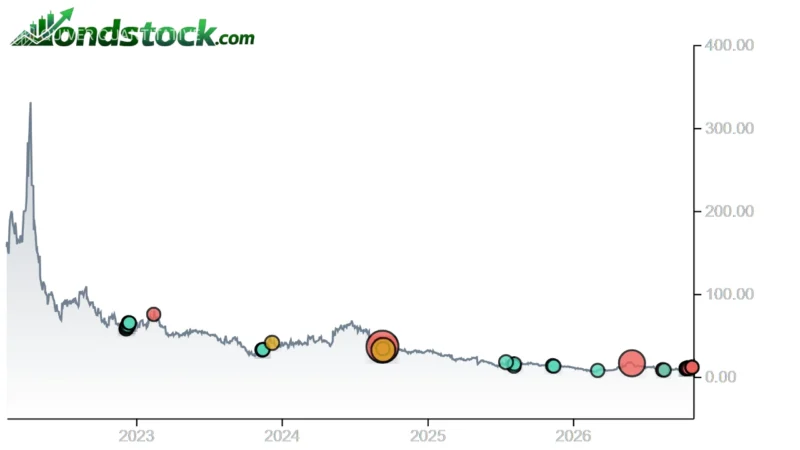

Asana stock is attracting investor attention as the company works to grow its project management business, expand its enterprise customer base, and improve its financial performance. With shares trading at $11.23 at the October 30, 2026, market close, investors are weighing its growth potential against competition, profitability concerns, and uncertainty about future performance.
Asana, Inc. trades on the New York Stock Exchange under the ticker ASAN. Its cloud-based platform helps teams manage projects, coordinate tasks, and organize work across departments. For investors, the central question is whether the company’s business opportunities can translate into stronger financial results and a more attractive share price.
This guide examines the latest supplied stock data, business fundamentals, potential growth drivers, key risks, and factors to consider before deciding whether ASAN is a buy, sell, or hold in 2026.
Asana Stock Price Today: Latest Market Performance
According to the supplied market data, Asana stock closed at $11.23 on October 30, 2026, down $0.03, or approximately 0.27%, for the session. The reported after-hours price was $11.10, a further decline of $0.13. These figures provide a snapshot of recent trading activity, but investors should check a live quote before making decisions because prices can change quickly.
The stock’s reported 52-week range is $5.38 to $15.28, showing that ASAN has experienced substantial price fluctuations. Its market capitalization stands at approximately $2.57 billion. The shares are trading below their 52-week high, but that alone does not establish whether the company is undervalued. Investors should consider revenue growth, profitability, competitive positioning, and future expectations alongside the share price.
| Market metric | Supplied figure |
|---|---|
| Stock ticker | NYSE: ASAN |
| Closing price | $11.23 |
| Daily change | -$0.03 (-0.27%) |
| After-hours price | $11.10 |
| Market capitalization | $2.57 billion |
| 52-week high | $15.28 |
| 52-week low | $5.38 |
| Dividend | None reported |
Asana Company Overview: Business Model and Revenue Sources
Asana develops cloud-based work management software that helps organizations plan projects, assign responsibilities, track deadlines, and coordinate teams. Its platform is designed to improve visibility across workflows, making it useful for companies managing multiple projects or departments. Businesses can use the software to organize everyday tasks while giving managers a clearer view of progress and potential bottlenecks.
The company’s subscription-based model provides a foundation for recurring revenue. Growth depends on attracting new customers, encouraging existing customers to adopt more features, and retaining organizations over time. Enterprise adoption can be especially important because larger customers may purchase more seats and advanced capabilities. However, Asana must continue demonstrating value to justify subscription costs, particularly when businesses have many competing software options.
Why Is Asana Stock Dropping?
A decline in ASAN shares can reflect several factors rather than a single problem. Investors may react negatively to slower revenue growth, disappointing earnings, weaker forward guidance, or changes in analyst price targets. Even when a company continues generating revenue, its stock can fall if results fail to meet expectations. Broader weakness across technology stocks can also put pressure on valuations, especially for software businesses whose future growth plays a major role in their market value.
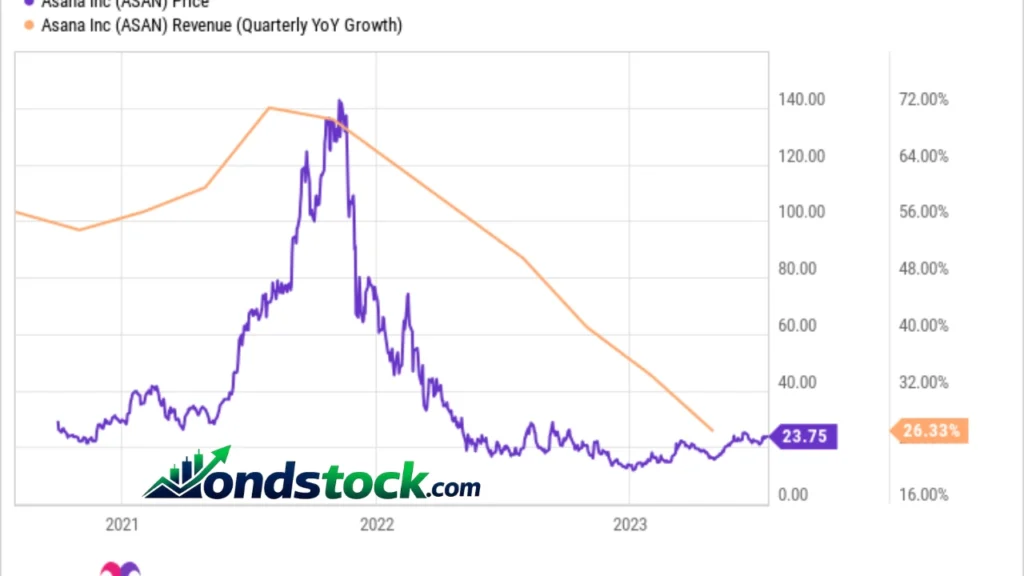
To understand a specific decline, investors should compare the timing of price movements with earnings announcements, management commentary, and broader market trends. Asana’s reported revenue growth of approximately 10% year over year suggests continued business expansion, but investors may want stronger growth or clearer evidence of improving profitability. Before concluding that a drop represents a buying opportunity, check the latest company filings and determine whether the underlying business outlook has improved or deteriorated.

Asana Financial Performance: Revenue, Earnings, and Cash Flow
The supplied quarterly financial data reports revenue of $216.43 million for fiscal Q2 2027, representing approximately 9.9% year-over-year growth. This indicates that the business is still expanding, although investors should assess whether that pace is sufficient to support the company’s valuation. Revenue growth becomes more compelling when accompanied by improving operating efficiency, customer retention, and a sustainable path toward positive cash generation.
Earnings results also deserve careful attention. The supplied figures indicate that Asana exceeded earnings-per-share expectations by 14.31% and revenue expectations by 1.06% for the reported quarter. These figures suggest a positive surprise relative to estimates, but they do not guarantee stronger future results. Investors should examine the complete earnings release to understand the quality of the results, the distinction between GAAP and adjusted earnings, and the company’s latest guidance.
Important financial indicators to monitor include:
- Revenue growth and subscription trends.
- Customer retention and enterprise customer expansion.
- Operating expenses and profit margins.
- Free cash flow and cash reserves.
- Management’s expectations for upcoming quarters.
Asana Stock Forecast 2026: Growth Potential and Price Outlook
The Asana stock forecast for 2026 depends on how effectively the company converts its product capabilities into sustained financial growth. Enterprise adoption, customer expansion, and new software features could support future revenue. However, slower corporate spending, competitive pricing, and pressure on software budgets could limit progress. Investors should evaluate management’s guidance and analyst estimates rather than relying on a single prediction or an assumed future share price.
Three broad scenarios can help investors assess the possible outcomes. In a bullish scenario, stronger enterprise demand, successful product innovation, and improving margins could support a higher valuation. In a base-case scenario, moderate growth and gradual operational improvements could produce mixed share-price performance. In a bearish scenario, weaker guidance, slower customer growth, or persistent profitability concerns could push shares lower. These are illustrative scenarios, not confirmed price targets or guarantees.
When reviewing forecasts, consider the assumptions behind each estimate, the date it was published, and whether analysts have revised their expectations after recent earnings. A forecast can quickly become outdated when business conditions change. Rather than treating a price target as a promise, investors can use it to understand market expectations and compare those expectations with Asana’s actual financial performance.
Asana Stock Valuation: Is ASAN Undervalued or Overvalued?
A share price of $11.23 may appear inexpensive compared with the stock’s reported 52-week high, but historical prices alone cannot determine fair value. Investors should compare Asana’s market capitalization and enterprise value with its revenue, growth rate, cash generation, and competitive position. The price-to-sales ratio can be useful for a software company, while enterprise value to revenue can help compare businesses with different cash and debt positions.
Profitability also matters when evaluating valuation. A company growing revenue but struggling to control expenses may deserve a different valuation from a competitor with similar growth and stronger margins. Investors should compare Asana with relevant software companies while accounting for differences in customer size, product offerings, growth, and profitability. Without current, verified peer multiples and detailed financial statements, it would be premature to declare ASAN either undervalued or overvalued.
Asana Stock: Key Risks Investors Should Know
Competition is a major risk because businesses can choose from numerous project management and workplace collaboration tools. If customers find competing products more affordable, easier to use, or better integrated with their existing software, Asana may face pressure on customer acquisition and retention. Product innovation and customer satisfaction are therefore important to its long-term prospects, particularly as AI features become more common across workplace software.
Financial and market risks also deserve attention. Slower revenue growth, disappointing guidance, higher operating costs, or weaker customer demand could affect the company’s outlook. Investors should also consider share-price volatility and the possibility that market sentiment changes even when business results remain relatively stable. A careful investment decision should account for portfolio diversification, personal risk tolerance, and the possibility of losing money rather than focusing exclusively on potential gains.

Asana Stock vs. Competitors: What Investors Should Compare
Asana competes in a crowded software market that includes Monday.com, Atlassian, and other providers of project management and workplace collaboration tools. These companies differ in their target customers, product ecosystems, pricing strategies, and financial performance. Comparing their businesses can help investors understand whether Asana has a convincing competitive position and whether its valuation reflects its growth opportunities.
A useful comparison should include revenue growth, operating margins, customer retention, enterprise adoption, and product differentiation. Investors should also examine how effectively each company introduces AI features and converts innovation into revenue. A competitor with a higher share price is not automatically more expensive, just as a company with a lower share price is not necessarily a better investment. Valuation multiples and underlying business performance provide more meaningful comparisons.
Asana Stock: Buy, Sell, or Hold in 2026?
Deciding whether to buy, sell, or hold ASAN requires a balanced assessment of its growth prospects, financial performance, valuation, and risks. The reported quarterly revenue growth and earnings surprise provide encouraging signals, but investors should also examine management’s outlook and the company’s ability to improve profitability. Strong products alone are not enough to guarantee attractive shareholder returns if growth slows or the stock’s valuation remains difficult to justify.
A practical decision framework can help investors avoid reacting emotionally to short-term price movements. Consider these factors before making a decision:
- Buy consideration: Revenue growth remains healthy, valuation appears reasonable, and financial performance supports future expansion.
- Hold consideration: The business continues progressing, but investors need more evidence of sustained growth or improved profitability.
- Sell consideration: The company’s long-term outlook weakens, its financial performance disappoints, or the investment no longer fits your goals.
These are general evaluation criteria, not personalized recommendations. Investors should review current financial disclosures, analyst expectations, and their own risk tolerance before acting.
What to Watch Before Asana’s Next Earnings Report
Asana’s next earnings report could provide important information about customer demand, operating efficiency, and management’s expectations for future growth. Investors should verify the next confirmed reporting date through the company’s official investor relations website rather than relying on unconfirmed calendar listings. They should also review the previous quarter’s guidance to understand whether the business is meeting, exceeding, or falling short of its stated objectives.
Pay particular attention to revenue growth, operating expenses, margins, and customer trends. Management commentary about enterprise demand, product adoption, and AI investment may also help explain the company’s future direction. Analyst estimate revisions can provide additional context, but the underlying financial results remain essential. Comparing several quarters of performance is generally more informative than judging the business by a single earnings announcement or one day’s stock-price movement.
Conclusion: Is Asana Stock Worth Watching in 2026?
Asana offers exposure to the work management software market, where businesses continue to seek tools that improve collaboration, organization, and productivity. The supplied figures show quarterly revenue growth of approximately 10% and a share price of $11.23 at the October 30, 2026, close. These figures provide a starting point for analysis, but investors need the latest financial statements and management guidance to assess the company’s longer-term prospects.
Whether ASAN deserves a buy, sell, or hold rating ultimately depends on its valuation, growth trajectory, profitability, and competitive position. Investors should look beyond short-term price fluctuations and assess whether Asana can translate customer demand into sustainable financial results. Reviewing upcoming earnings, comparing competitors, and managing downside risk can help investors make more informed decisions without assuming that any forecast will necessarily come true.
Frequently Asked Questions
What is Asana stock’s ticker symbol?
Asana, Inc. trades on the New York Stock Exchange under the ticker symbol ASAN.
What is the Asana stock price today?
The supplied data lists a closing price of $11.23 on October 30, 2026; check a live market quote for the latest price.
Is Asana stock a buy, sell, or hold in 2026?
The decision depends on current valuation, revenue growth, profitability, competitive risks, and your investment objectives.
What is the Asana stock forecast for 2026?
The outlook depends on future revenue growth, earnings, management guidance, analyst expectations, and broader market conditions.
Why is Asana stock dropping?
Potential reasons include weaker guidance, earnings surprises, slower growth, analyst revisions, and broader declines in technology stocks.
Does Asana pay a dividend?
The supplied market data does not report a dividend; consult Asana’s latest official disclosures to verify its current dividend policy.
Is Asana stock a good long-term investment?
Its long-term potential depends on sustained business growth, stronger financial performance, competitive advantages, valuation, and your risk tolerance.
Who are Asana’s biggest competitors?
Major competitors in project management and workplace collaboration include Monday.com, Atlassian, and other productivity software providers.
Also Read…