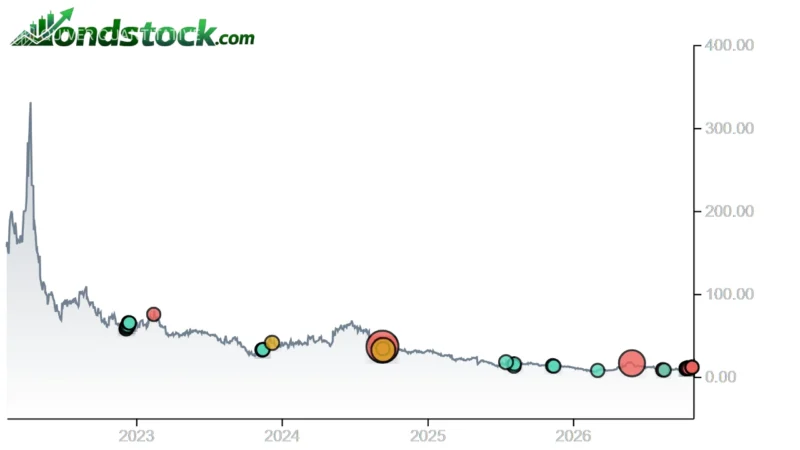

SpaceX has attracted enormous investor interest because of its ambitions in rocket launches, satellite internet, and next-generation space technology. As the company expands its operations, many investors want to understand its potential value over the next several years. The SpaceX stock price prediction 2030 is especially interesting because future growth could depend on Starlink, Starship, and new opportunities in computing infrastructure.
However, investors need to separate verified company information from speculative forecasts. SpaceX has historically operated as a privately held company, so its valuation and any privately traded share prices do not automatically represent a conventional stock market quotation. Understanding this distinction helps readers evaluate potential returns, recognize investment risks, and avoid relying on unsupported price targets.
What Is the Current SpaceX Stock Price?
Investors searching for the SpaceX stock price today should first confirm which financial instrument a website is displaying. SpaceX has historically been privately held rather than listed on a major stock exchange like Nasdaq or the New York Stock Exchange. Private company shares may change hands through eligible secondary-market transactions, but those transactions do not create the same continuous public price discovery available for listed stocks.
Some online platforms may display estimated valuations, private-market share prices, or tokenized products associated with SpaceX. These figures can differ significantly because they may represent different ownership rights, transaction terms, or pricing methods. Before trusting a quotation, check the asset’s legal identity, trading venue, and official documentation. A ticker such as SPCX should not automatically be treated as proof that SpaceX itself has a publicly listed stock.
SpaceX Stock Price Chart and Historical Valuation Trends
A conventional SpaceX stock price chart would show daily trading prices, trading volume, and historical market movements. Because SpaceX has historically been privately held, investors generally cannot rely on a standard exchange chart for the company’s actual shares. Instead, they may examine reported funding rounds, disclosed secondary transactions, and credible reports about changes in the company’s private valuation.
These valuation milestones can provide useful context, but they require careful interpretation. A company’s total valuation represents the estimated worth of its equity, while a share price represents the value assigned to a particular share under specific terms. Share classes, transaction restrictions, and changing investor demand can affect the relationship between these figures. For long-term research, use dated, reputable sources and distinguish completed transactions from estimates or promotional claims.
SpaceX Stock Price Prediction 2030: Long-Term Forecast
The SpaceX stock price prediction 2030 depends on how successfully the company turns ambitious technology projects into sustainable revenue and profits. Starlink could provide recurring income through internet subscriptions, while Starship may support larger payloads and more complex space missions. However, development costs, competition, and the possibility of slower commercial adoption could limit future valuation growth.
Rather than treating one price target as certain, investors can compare three possible scenarios. These scenarios are illustrative, not verified analyst consensus or guaranteed share-price outcomes.
| Scenario | Potential business outcome | What it could mean |
|---|---|---|
| Conservative | Slower growth, delays, or valuation pressure | The company’s valuation could stagnate or decline |
| Moderate | Continued Starlink expansion and gradual launch growth | Valuation could increase if revenue and profitability improve |
| Bullish | Major Starship advances and successful new business lines | A substantially higher valuation could become possible |
Some online forecasts suggest prices near $125 to $150, while highly optimistic models suggest $1,200 to $2,500 by 2030. These figures should not be interpreted as comparable, verified forecasts without checking their sources, starting prices, share structures, and assumptions. Stock splits, changes in share count, and differences between private shares and tokenized products can also make nominal price comparisons misleading.
SpaceX Stock Price Forecast: Major Growth Drivers
Starlink is one of the most important businesses to watch when assessing SpaceX’s future. Its satellite network serves customers who need internet access in areas where traditional broadband is limited or unavailable. More subscribers, enterprise contracts, aviation connectivity, and maritime services could increase recurring revenue. However, profitability also depends on equipment expenses, satellite replacement, network capacity, and the cost of maintaining global coverage.
Starship offers another potential growth opportunity. If development progresses successfully, the vehicle could support larger payloads, reusable launch operations, and future space infrastructure projects. These capabilities could expand commercial opportunities, although technical progress does not automatically translate into profitable operations. Investors should also monitor emerging computing and artificial intelligence initiatives carefully, relying on verified business announcements and financial disclosures rather than assuming speculative projects will produce enormous future revenue.
SpaceX Stock Price Forecast 2027 and Target Estimates
The years leading up to 2030 provide useful checkpoints for evaluating the company’s progress. A SpaceX stock price forecast 2027 should consider developments in Starship testing, launch frequency, Starlink expansion, commercial demand, and operating costs. These indicators can help investors judge whether the company’s growth expectations remain realistic, even when a conventional publicly traded share price is unavailable.
A meaningful SpaceX stock price target 2027 requires a clear valuation method and a defined investment instrument. Forecasts based on private equity transactions may not be comparable with prices quoted for tokenized products or other instruments claiming SpaceX exposure. Instead of relying on an isolated target, examine the assumptions behind each estimate and compare them with subsequent business developments. This approach creates a more useful framework for assessing long-term opportunities.
Why Could the SpaceX Stock Price Drop?
Even a successful company can experience a declining valuation when investor expectations become too ambitious. SpaceX faces complex engineering challenges, significant development costs, regulatory requirements, and competition in satellite communications and launch services. If important projects experience delays or revenue grows more slowly than expected, investors may become less willing to pay a premium for anticipated future growth.
Several factors could place downward pressure on a private valuation:
- Technical setbacks involving rockets, launches, or satellite deployment.
- Higher capital spending and slower progress toward profitability.
- Strong competition from other satellite internet providers, including Amazon’s Project Kuiper.
- Regulatory restrictions or changes in government contract demand.
- Higher interest rates or weaker appetite for high-growth private companies.
Liquidity is another important concern. Private shares may be difficult to sell quickly, and a reported valuation may not reflect the price an individual investor could actually receive. These risks make independent research essential before committing money to a private investment.
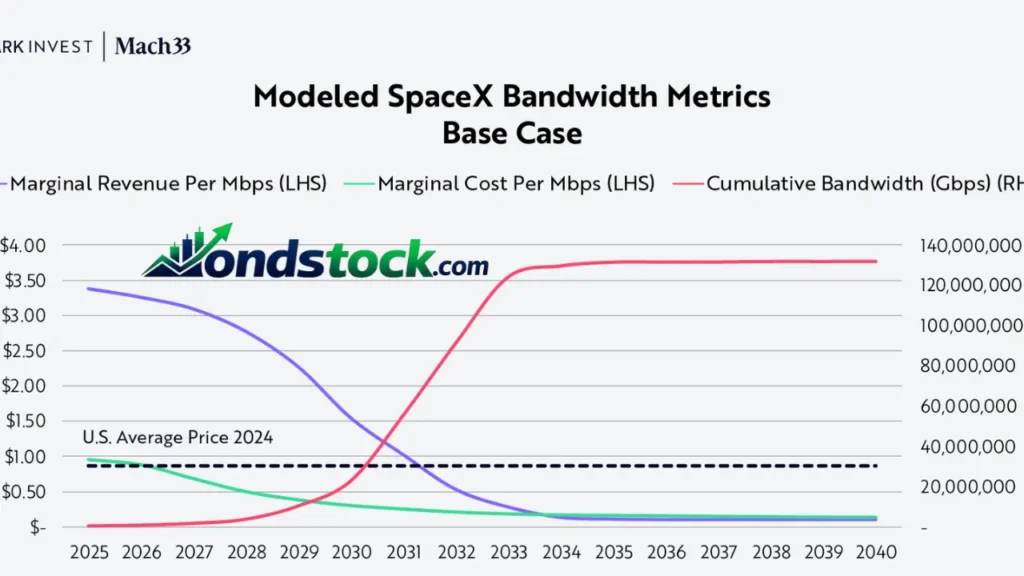
SpaceX Stock Price Estimate: How to Value the Company
A reliable SpaceX stock price estimate should begin with the company’s expected revenue, profit potential, capital requirements, and competitive position. Investors commonly use valuation methods such as revenue multiples, comparisons with similar businesses, and discounted cash flow analysis. Each method has limitations, particularly when a company is investing heavily in technologies that may take years to generate meaningful commercial returns.
Revenue multiples can help compare businesses, but a high multiple may leave little room for disappointing results. Discounted cash flow analysis estimates the present value of expected future cash flows, making its conclusions sensitive to assumptions about growth, margins, and investment costs. A sound valuation should also account for future share issuance, ownership rights, and liquidity restrictions. Comparing multiple scenarios is more informative than accepting one attractive estimate without examining its assumptions.
SpaceX Stock Price IPO: Will SpaceX Go Public?
An initial public offering, or IPO, allows a company to sell shares to public investors through a formal listing process. A potential SpaceX IPO attracts attention because public trading could give eligible investors a more accessible way to buy shares and provide a continuously updated market price. However, an anticipated listing should not be confused with a confirmed offering, and investors should check official company announcements for reliable information.
If SpaceX eventually goes public, its offering price would depend on the proposed valuation, share structure, investor demand, and offering terms. The market price could then rise or fall as investors react to financial results and business developments. IPO investors should also consider valuation risk, early volatility, and any applicable lockup restrictions. Until an offering is officially confirmed, a specific listing date or future public share price remains uncertain.
How to Buy SpaceX Stock Before an IPO
Buying shares in a private company is different from purchasing a listed stock through a standard brokerage account. Access to private-market transactions may be limited to eligible investors, and minimum investment amounts, fees, legal requirements, and resale restrictions can vary. Even when a transaction is available, investors may have limited information about the underlying asset and few opportunities to sell their holdings.
Before considering any offer, verify the provider and the precise investment being sold. Some platforms may offer indirect exposure or tokenized instruments rather than direct ownership of SpaceX shares. These products can carry additional risks involving custody, legal rights, liquidity, and the provider itself. Never assume that a website displaying a SpaceX-related ticker guarantees ownership in the company. Review the documentation carefully and seek qualified financial advice when necessary.
Tesla and SpaceX Stock Price: Understanding the Difference
Tesla and SpaceX are separate businesses with different ownership structures and sources of revenue. Tesla is publicly traded, while SpaceX has historically been privately held. Although both companies are associated with Elon Musk, their share prices and valuations are not interchangeable. Buying Tesla shares does not automatically provide direct ownership of SpaceX, and Tesla’s market performance cannot establish SpaceX’s fair value.
Investors may compare the companies to understand broader technology trends, capital requirements, or investor sentiment. They may also examine publicly traded aerospace, satellite communications, and technology businesses when estimating SpaceX’s potential valuation. However, each comparison requires care because business models, financial performance, growth expectations, and competitive risks differ. A useful analysis focuses on relevant financial measures rather than assuming companies with a common association will deliver similar investment returns.
SpaceX Stock Price One Month Return and Investment Risks
Monthly stock returns are generally calculated by comparing a security’s price at the beginning and end of a period, including relevant distributions where appropriate. For privately held SpaceX shares, the calculation is more difficult because a continuous, publicly observable market price may not exist. Reported private valuations can help indicate broad changes in investor expectations, but they do not establish a precise monthly return for every shareholder.
Investors should consider their time horizon, ability to tolerate losses, and need for access to their money. Private investments can involve substantial uncertainty, limited disclosure, and extended holding periods. Even a company with promising technology can deliver disappointing investment results if its initial valuation is too high. Diversification and independent research can help investors avoid placing too much financial risk on one company’s future success.
What Investors Should Watch Before 2030
The strongest forecasts are updated as new evidence becomes available. Investors following SpaceX should monitor official announcements, credible financial reporting, technological milestones, and regulatory developments rather than relying entirely on online predictions. Starlink’s commercial expansion, Starship’s development, launch operations, and the company’s capital requirements can all influence how investors assess its prospects.
Useful indicators to monitor include:
- Starlink subscriber growth and expansion into new markets.
- Starship development milestones and commercial launch opportunities.
- Revenue growth, operating costs, and evidence of improving profitability.
- Verified funding rounds and private-market transactions.
- Official disclosures about a potential IPO or new business initiatives.
These indicators will not produce a perfectly accurate forecast, but they can help readers evaluate whether optimistic assumptions are becoming more credible. For the SpaceX stock price prediction 2030, the most useful question is not simply how high the price could rise. It is whether measurable business progress could justify the valuation investors are being asked to accept.
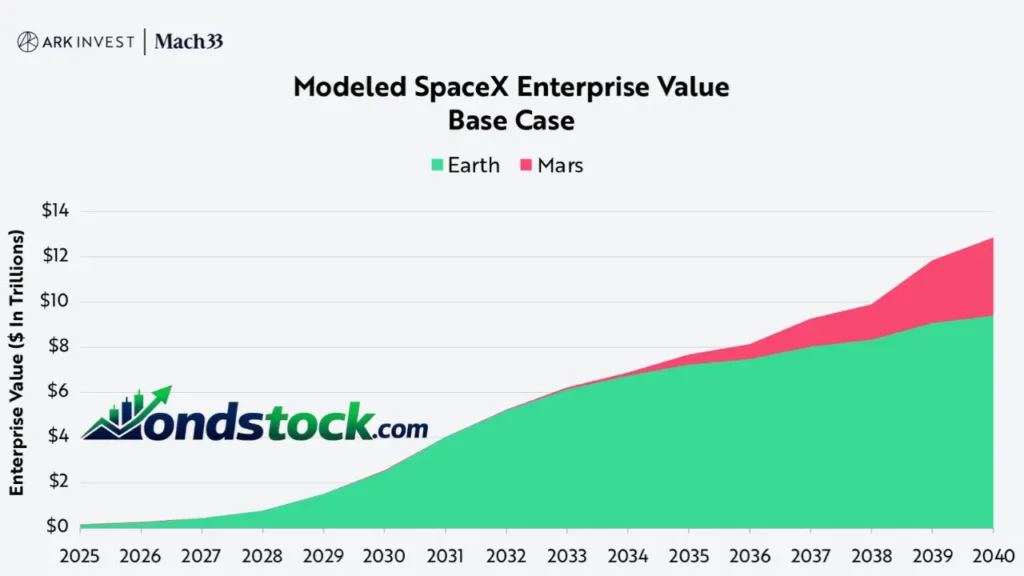
Conclusion: Is SpaceX Stock Worth Watching Through 2030?
SpaceX could have significant long-term growth opportunities through satellite internet, reusable launch technology, and future space infrastructure. However, the company’s potential is balanced by technical challenges, substantial capital requirements, competition, and uncertainty about its future valuation. The SpaceX stock price prediction 2030 should therefore be viewed as a range of possible outcomes rather than a promise of future returns.
Investors should verify whether a quoted price represents actual company shares, review the assumptions behind published forecasts, and follow credible announcements about business performance and any potential IPO. A disciplined approach that weighs both growth opportunities and downside risks is more useful than chasing the highest available price target. Ultimately, SpaceX’s long-term investment potential will depend on how effectively it turns ambitious projects into sustainable commercial results.
Frequently Asked Questions
What is the SpaceX stock price today?
SpaceX has historically been privately held, so there is no conventional public exchange price for its ordinary shares unless an official listing changes that status.
What is the SpaceX stock price prediction 2030?
Forecasts vary widely, and any estimate depends on assumptions about Starlink, Starship, profitability, future financing, and the company’s valuation.
Does SpaceX have a publicly traded stock ticker?
SpaceX has historically not traded as a conventional publicly listed company, so verify any ticker claiming to represent its actual shares.
What is the SpaceX stock price forecast for 2027?
A reliable forecast should consider business growth, technological progress, funding activity, and verified valuation information rather than an unsupported price target.
Will SpaceX have an IPO?
A potential IPO remains subject to official confirmation, so investors should consult company announcements rather than rely on speculative listing dates.
Can I buy SpaceX stock before its IPO?
Private-market access may be available to eligible investors under specific conditions, but ownership rights, fees, liquidity, and eligibility requirements must be checked carefully.
Why could the SpaceX stock price drop?
A lower valuation could result from technical setbacks, rising costs, slower growth, stronger competition, regulatory challenges, or weaker investor demand.
Is Tesla stock the same as SpaceX stock?
No. Tesla and SpaceX are separate companies, and owning Tesla shares does not automatically give you direct ownership of SpaceX.
Also Read…