Investors looking for long-term exposure to technology and growth often compare VGT and QQQM. Both ETFs provide access to major companies that have benefited from digital transformation, cloud computing, artificial intelligence, and other powerful trends. However, they follow different strategies and offer different levels of sector diversification. Understanding those differences can help you choose an ETF that fits your portfolio rather than simply following recent performance.
The biggest distinction is straightforward. VGT focuses specifically on the U.S. information technology sector, while QQQM tracks the Nasdaq-100 and therefore includes companies from several sectors. That difference affects holdings, concentration, risk, and potential returns. A careful comparison should consider more than the latest VGT stock price or QQQM performance because your investment objective, time horizon, and existing portfolio also matter.
What Is VGT ETF?
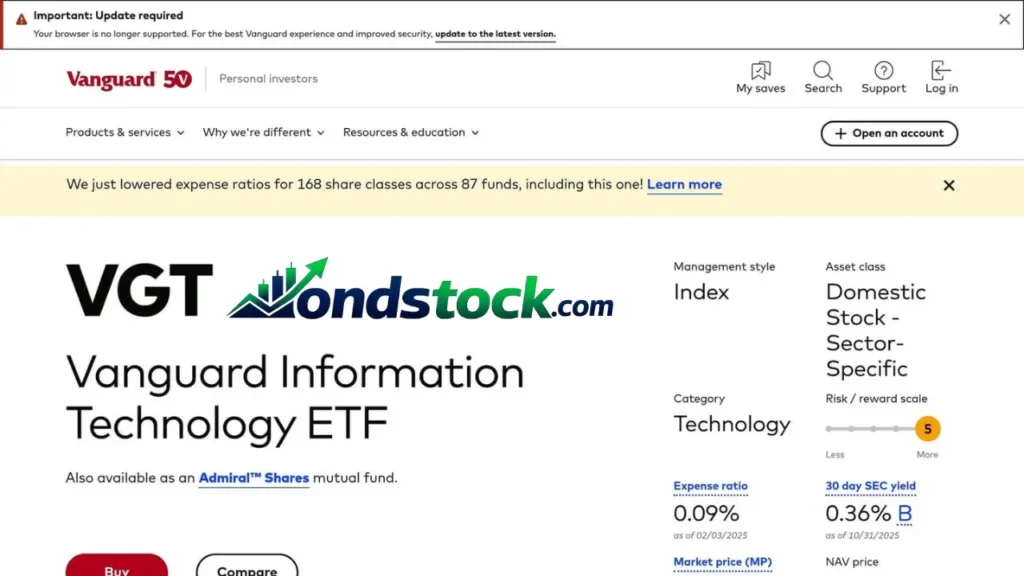
VGT is the Vanguard Information Technology ETF, a fund designed to provide exposure to the U.S. information technology sector. It tracks the MSCI US Investable Market Information Technology 25/50 Index and holds companies across different areas of technology. These can include software, semiconductors, hardware, information technology services, and other technology-related businesses. This focused structure makes VGT particularly interesting for investors who want a strong technology allocation.
When investors search for VGT stock, VGT price, or VGT stock price today, they are usually looking for the market value and current trading information of the ETF. Technically, VGT is an exchange-traded fund rather than an individual company stock. Its market price changes throughout the trading day based on supply, demand, and movements in the underlying securities held by the fund.
What Is QQQM?
QQQM is the Invesco NASDAQ 100 ETF, which is designed to track the Nasdaq-100 Index. Instead of limiting itself to information technology companies, QQQM invests in the largest non-financial companies listed on the Nasdaq. Technology companies represent a major portion of the index, but the portfolio also includes businesses from areas such as consumer discretionary and communication services.
That broader structure gives QQQM a different type of growth exposure. Investors can gain access to major technology names while also holding companies that do not fall directly into the technology sector. For example, companies such as Amazon, Alphabet, and Tesla can contribute to Nasdaq-100 performance even though their sector classifications differ from traditional information technology businesses.
VGT vs QQQM: Key Differences at a Glance
The central difference between these funds is their investment mandate. VGT is designed around information technology, while QQQM follows the Nasdaq-100. As a result, the funds can hold several of the same large companies, but their overall portfolios are constructed differently.
| Feature | VGT | QQQM |
|---|---|---|
| Fund type | Technology-sector ETF | Nasdaq-100 ETF |
| Primary focus | U.S. information technology | Large non-financial Nasdaq companies |
| Strategy | Sector focused | Growth and large-cap focused |
| Diversification | Primarily within technology | Broader across several sectors |
| Technology exposure | Very high | High, but not exclusive |
| Major growth exposure | Strong | Strong |
| Main risk | Technology concentration | Large-cap growth concentration |
| Typical use | Targeted technology allocation | Broad growth-oriented allocation |
This distinction is important because two funds can both behave like technology investments without actually being identical. During a strong technology rally, both may benefit. However, their performance can diverge when non-technology Nasdaq companies outperform or when different industries respond differently to economic conditions.
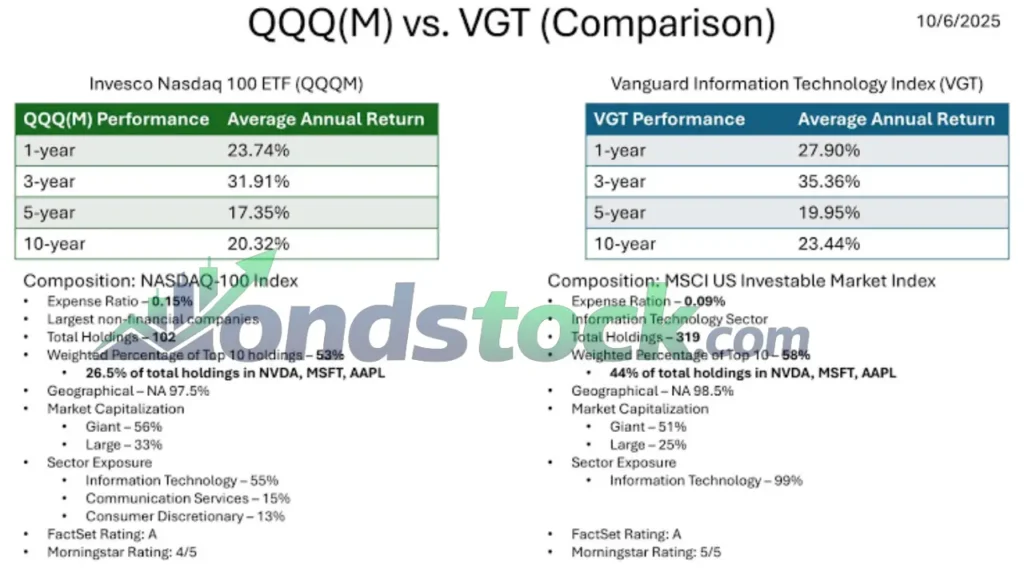
VGT vs QQQM Holdings
VGT holdings are concentrated within the information technology sector. Its portfolio includes companies involved in semiconductors, software, hardware, technology services, and related industries. Because the fund has a specific sector mandate, its performance can be strongly influenced by developments affecting the technology industry as a whole.
QQQM holdings are different because the Nasdaq-100 includes major companies from multiple sectors. Its portfolio can include technology leaders alongside consumer and communication businesses. This gives QQQM a broader range of growth companies and can reduce the dependence on one formal sector classification, although it remains concentrated in large growth-oriented businesses.
The overlap between the two funds is still meaningful. Investors may find many familiar mega-cap technology companies in both portfolios. However, the weighting and inclusion rules can differ, meaning owning both does not necessarily create two completely independent investments.
VGT vs QQQM Expense Ratio and Costs
Investment costs can have a meaningful impact on long-term results, especially when you hold an ETF for many years. VGT has historically been known for its low-cost structure, while QQQM was also designed as a lower-cost alternative for investors seeking Nasdaq-100 exposure. The exact expense ratios should always be checked against the latest fund information before making an investment decision.
A lower expense ratio does not automatically make one ETF the better choice. A fund can justify a slightly higher cost if its strategy provides exposure that better matches your goals. Still, fees are one of the easiest factors for investors to compare because they directly reduce the return retained by the fund over time.
For long-term investors, consider:
- Expense ratio
- Bid-ask spread
- Trading costs
- Portfolio turnover
- Tax considerations
- Tracking difference
Looking only at the advertised expense ratio can therefore miss some of the practical costs associated with owning an ETF.
VGT vs QQQM Performance and Returns
Historical performance is one of the most attractive parts of comparing VGT with QQQM. Both funds have benefited from the long-term expansion of technology and growth businesses, but their returns can differ substantially over specific periods. VGT can benefit strongly when information technology companies lead the market, while QQQM can gain from broader strength across the Nasdaq-100.
Recent performance should not be treated as a guarantee of future results. A fund that leads during one period can lag during another because market leadership changes. Interest rates, corporate earnings, valuations, artificial intelligence investment, semiconductor demand, consumer spending, and economic growth can all influence these ETFs.
A better approach is to compare several periods and understand why performance differed. Instead of asking only which ETF had the highest return last year, consider whether its underlying strategy fits the conditions you expect to encounter over your full investment horizon.
VGT vs QQQM Risk and Volatility
Risk is another major consideration. VGT’s concentrated technology exposure can create stronger sensitivity to technology-sector corrections. If semiconductor, software, or hardware stocks decline sharply, the fund can feel the impact across a large part of its portfolio. This concentration can create substantial upside during strong technology markets but also greater dependence on one sector.
QQQM has broader sector exposure, but it should not automatically be considered a low-risk investment. The Nasdaq-100 is heavily influenced by large growth companies, and those businesses can react strongly to interest rates and valuation changes. When investors reduce their appetite for expensive growth stocks, QQQM can also experience meaningful volatility.
For this reason, investors should evaluate risk based on their complete portfolio. Someone who already owns several technology-heavy funds may not need another highly concentrated technology allocation, while an investor with broad market exposure may intentionally add a focused technology ETF.
VGT vs QQQM Diversification
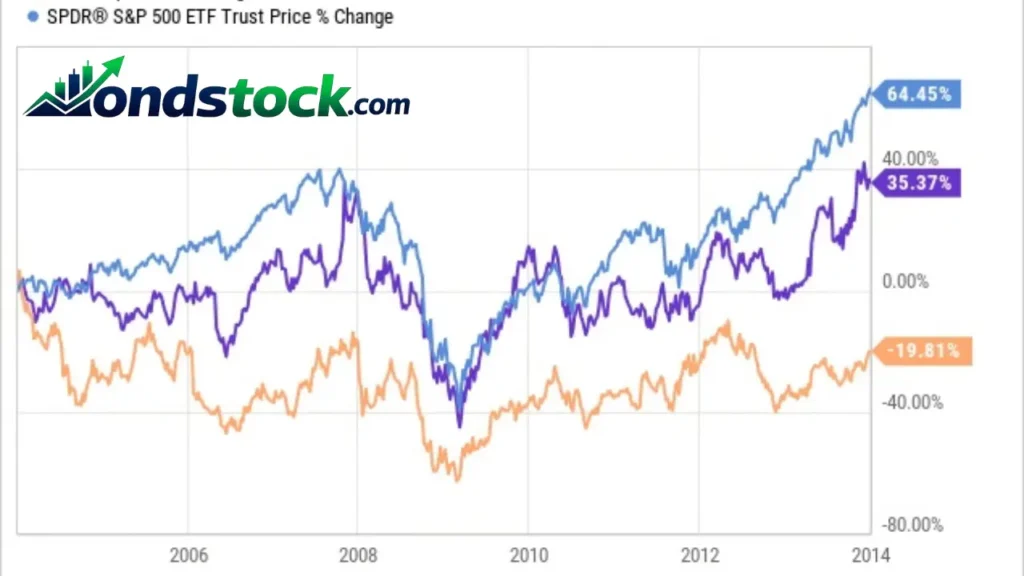
Diversification is where the difference between these ETFs becomes especially useful. VGT provides diversification across many technology companies, but it remains concentrated within a particular sector. Owning dozens or hundreds of technology businesses does not eliminate the risk associated with a broad technology downturn.
QQQM provides another layer of diversification because its holdings span multiple industries within the Nasdaq-100. However, it is still not equivalent to a total-market ETF. The fund remains heavily tilted toward large, successful growth companies, so its diversification should be viewed relative to VGT rather than compared with a broad-market fund.
Investors should also examine what they already own. If your portfolio contains a broad S&P 500 fund, adding QQQM may increase your exposure to the same mega-cap growth companies. Adding VGT can create an even more concentrated technology tilt.
VGT vs QQQM vs QQQ
QQQ and QQQM are closely related because both provide exposure to the Nasdaq-100 Index. Their investment objective is therefore much more similar to each other than either is to VGT. One reason investors consider QQQM is its structure as a long-term Nasdaq-100 ETF with a competitive expense profile.
VGT differs because it specifically targets information technology. Investors comparing QQQ vs VGT should therefore first decide whether they want Nasdaq-100 exposure or a dedicated technology-sector allocation. Investors comparing QQQM vs VGT face essentially the same strategic question, with QQQM offering the Nasdaq-100 approach.
VGT vs VUG and VOO
VUG provides broad U.S. growth-stock exposure rather than focusing exclusively on technology. This makes VGT vs VUG a useful comparison for investors who want growth but do not necessarily want their portfolio dominated by one sector. VUG can include technology leaders while also providing exposure to other growth-oriented industries.
VOO takes diversification a step further by tracking the S&P 500. It provides exposure to large U.S. companies across many industries and can serve as a core portfolio holding. Compared with VOO, VGT is a much more targeted sector investment. QQQM sits somewhere between these concepts because it provides broad Nasdaq-100 exposure but remains heavily tilted toward growth.
VGT Stock Price, ETF Price, and What Investors Should Watch
The VGT ETF price changes throughout the trading session as its underlying holdings move. Investors checking the VGT stock price today should remember that short-term price movements do not necessarily indicate a change in the fund’s long-term investment case. Market sentiment, earnings reports, interest-rate expectations, and technology-sector news can all create daily volatility.
The same principle applies to QQQM. Rather than focusing exclusively on today’s price, investors should monitor the fundamentals behind the companies in each portfolio. Corporate earnings, valuations, artificial intelligence spending, semiconductor demand, cloud adoption, monetary policy, and economic growth can all influence future returns.
Which ETF Is Better for Long-Term Investors?
There is no universal winner because VGT and QQQM solve slightly different investment problems. VGT can make more sense for someone who deliberately wants concentrated information technology exposure. Its structure provides a direct way to emphasize the technology sector without selecting individual technology stocks.
QQQM may be more suitable for an investor who wants large-cap growth exposure across the Nasdaq-100. Its broader sector composition can provide access to important companies that may not be classified as information technology. The right choice ultimately depends on how the ETF fits with your existing investments.
Consider these factors before choosing:
- Your desired technology exposure
- Your tolerance for volatility
- Your investment time horizon
- Your existing ETF holdings
- Your preferred level of diversification
- Expense ratios and trading costs
- Your overall portfolio allocation
VGT vs QQQM: Pros and Cons
Both ETFs have clear strengths, but neither is perfect for every portfolio. VGT’s biggest advantage is its targeted technology exposure, while its biggest weakness is the same concentration. QQQM offers broader Nasdaq exposure, but its large-cap growth concentration can still create substantial market sensitivity.
| ETF | Main Advantages | Main Considerations |
|---|---|---|
| VGT | Strong technology exposure, diversified tech holdings, low-cost structure | Higher sector concentration |
| QQQM | Broad Nasdaq-100 exposure, major growth companies, multiple sectors | Large-cap growth concentration |
| VGT | Useful for a technology tilt | Can overlap with other tech funds |
| QQQM | Useful for diversified growth exposure | Can overlap with broad-market ETFs |
The decision should therefore be based on portfolio construction rather than simply choosing the ETF with the strongest recent return.
How to Choose Between VGT and QQQM
Start by identifying what you want the ETF to accomplish. If your goal is to increase your exposure specifically to technology companies, VGT offers a more direct solution. If your goal is broader exposure to leading Nasdaq-listed growth businesses, QQQM may be more appropriate.
Next, review your existing holdings. If you already own a significant amount of technology through individual stocks or sector ETFs, adding VGT could increase concentration more than you realize. QQQM can also create substantial overlap with large-cap growth holdings, so diversification should always be assessed at the portfolio level.
Conclusion
VGT and QQQM both provide compelling access to companies driving long-term growth, but they take different routes to get there. VGT is the more concentrated technology-sector choice, while QQQM provides broader Nasdaq-100 exposure across technology and other growth-oriented industries. That difference can affect performance, risk, diversification, and portfolio construction.
Rather than asking which ETF is universally better, investors should ask which strategy better matches their objectives. Compare holdings, costs, volatility, diversification, and existing portfolio exposure before investing. For a focused technology allocation, VGT can be compelling. For broader large-cap Nasdaq growth exposure, QQQM may be the better fit.
Frequently Asked Question
Is VGT better than QQQM?
Neither is universally better; VGT favors concentrated technology exposure, while QQQM provides broader Nasdaq-100 growth exposure.
What is the main difference between VGT and QQQM?
VGT focuses on the information technology sector, while QQQM tracks the Nasdaq-100 across several industries.
Is VGT more diversified than QQQM?
VGT can hold many technology companies, but QQQM offers broader diversification across multiple Nasdaq-100 sectors.
Which has better performance, VGT or QQQM?
Performance varies by period, so investors should compare long-term results and understand the factors driving each fund’s returns.
What is the VGT expense ratio?
VGT is known for its low-cost structure, but investors should check Vanguard’s latest official fund data for the current expense ratio.
What are the top VGT holdings?
VGT’s largest holdings are generally major U.S. information technology companies, with portfolio weights changing over time.
Should I own both VGT and QQQM?
Owning both can increase growth exposure, but investors should consider their significant overlap and overall portfolio concentration.
VGT vs QQQ: Which ETF is better?
VGT targets information technology, while QQQ tracks the Nasdaq-100, making the better choice dependent on your desired exposure.
Also Read…