
The VOO dividend comes from the Vanguard S&P 500 ETF, which seeks to track the S&P 500 Index. Unlike a traditional high-yield dividend fund, VOO combines dividend-paying U.S. large-cap companies with broad-market exposure and potential capital appreciation.
As of September 18, 2026, VOO had paid $7.35 per share over the previous 12 months, giving it a trailing dividend yield of about 1.05% based on the cited market data. VOO distributes dividends quarterly. Its most recent completed payment was $1.9622 per share on June 30, 2026.
Vanguard’s official 2026 schedule lists September 28 as VOO’s next scheduled record/ex-dividend date and September 30 as the payable date. The December distribution is scheduled for December 21, with payment on December 23.
Important: Dividend amounts and yields can change. A yield calculated from a trailing annual payout is different from a guaranteed future return.
What Is the VOO Dividend?
The VOO dividend is the distribution paid to shareholders of the Vanguard S&P 500 ETF from income generated by the securities held by the fund.
VOO owns a diversified portfolio designed to provide exposure to the companies represented in the S&P 500. When those companies pay dividends, the fund receives the income and distributes a portion to VOO shareholders after accounting for fund expenses and other factors.
VOO is therefore different from a single-company stock dividend. Its distribution reflects the combined income generated by a large portfolio of U.S. companies.
This structure gives investors two potential components of total return:
- Dividend income
- Capital appreciation
For that reason, VOO is commonly used as a broad-market portfolio holding rather than solely as an income-focused investment.
How Much Does VOO Pay in Dividends?
As of September 18, 2026, VOO had paid $7.35 per share during the preceding 12 months. Its latest completed quarterly distribution was $1.9622 per share, paid June 30, 2026.
The recent quarterly payments were: investing.com
| Ex-Dividend Date | Dividend Per Share | Payment Date |
|---|---|---|
| Jun. 26, 2026 | $1.9622 | Jun. 30, 2026 |
| Mar. 27, 2026 | $1.8724 | Mar. 31, 2026 |
| Dec. 22, 2025 | $1.7710 | Dec. 24, 2025 |
| Sep. 29, 2025 | $1.7400 | Oct. 1, 2025 |
The quarterly amount is not fixed. Investors should therefore avoid assuming that every future VOO dividend will equal the most recent payment.
What Is the VOO Dividend Yield?
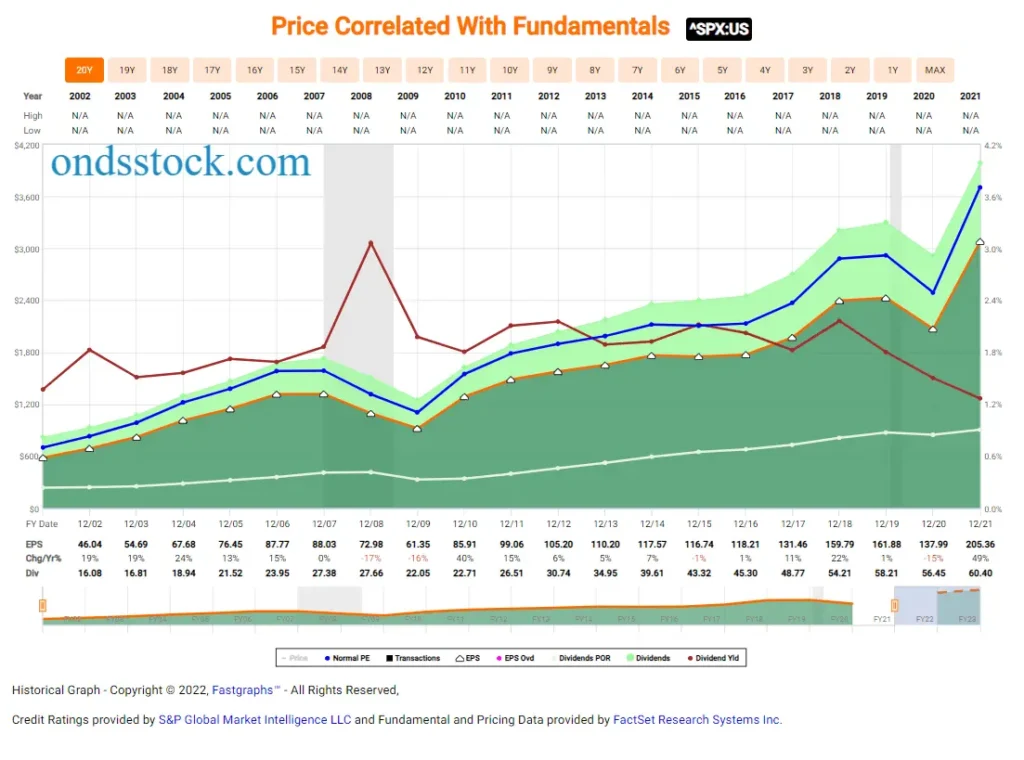
The VOO dividend yield was approximately 1.05% as of September 17, 2026, based on a $7.35 trailing 12-month dividend and the cited VOO market price.
The basic calculation is:
Dividend Yield = Annual Dividend ÷ Share Price × 100
For example, using $7.35 in trailing annual dividends and a share price around $701:
$7.35 ÷ $701 × 100 ≈ 1.05%
Because the share price changes throughout the trading day, the displayed yield can also change even when the fund has not announced a new dividend.
Why Is the VOO Dividend Yield So Low?
VOO’s yield is relatively modest because the fund is designed to track the broad S&P 500 rather than specifically select the highest-paying dividend stocks.
Many S&P 500 companies return capital through a combination of dividends and share repurchases. Other companies reinvest substantial cash into expansion, technology, acquisitions, or other business activities.
Consequently, VOO’s objective is broader than maximizing current dividend income.
VOO Dividend History
VOO has historically made quarterly distributions, although the amount has varied from quarter to quarter.
Recent history illustrates the upward movement in the dollar amount of distributions over several years:
| Year | Quarterly Distribution Totals |
|---|---|
| 2022 | About $5.95 per share |
| 2023 | About $6.36 per share |
| 2024 | About $6.70 per share |
| 2025 | About $7.07 per share |
| 2026* | $3.83 through June |
*2026 is incomplete. The first two 2026 distributions totaled approximately $3.83 per share; the September and December distributions had not yet been paid as of September 18, 2026. Historical distribution amounts are based on the published payment history.
The historical pattern shows why looking at only one quarterly payment can be misleading. VOO’s annual payout is made up of four distributions that can differ in size.
VOO Dividend Payment Schedule
VOO generally pays dividends four times a year.
For 2026, Vanguard’s published schedule gives these dates for VOO:
| 2026 Event | Date |
|---|---|
| First ex-dividend/reinvestment date | March 27 |
| First payment date | March 31 |
| Second ex-dividend/reinvestment date | June 26 |
| Second payment date | June 30 |
| Third ex-dividend/reinvestment date | September 28 |
| Third payment date | September 30 |
| Fourth ex-dividend/reinvestment date | December 21 |
| Fourth payment date | December 23 |
These are scheduled dates published by Vanguard. The actual distribution amount is determined separately.
What Is the VOO Ex-Dividend Date?
The VOO ex-dividend date is the date used to determine eligibility for the upcoming distribution.
For the September 2026 distribution, Vanguard’s published schedule lists September 28, 2026 as the ex-dividend/reinvestment date and September 30, 2026 as the payable date.
The key dates to understand are:
- Ex-dividend date: The date associated with eligibility for the distribution.
- Record date: The date used to identify eligible shareholders.
- Payment date: When the distribution is scheduled to be paid.
Investors should check the official fund information and their brokerage account when a specific dividend date matters.
How Often Does VOO Pay Dividends?
VOO pays dividends quarterly, meaning investors normally receive four distributions during a calendar year. Its recent history confirms a March, June, September, and December pattern.
However, quarterly does not mean each payment is identical. The amount can change depending on the dividends received by the stocks in the portfolio.
What Is the VOO Annual Dividend?
The current trailing annual dividend for VOO is approximately $7.35 per share as of September 18, 2026.
This figure represents the distributions paid during the previous 12 months. It should not automatically be interpreted as VOO’s guaranteed dividend for the next 12 months.
For comparison, simply annualizing the latest $1.9622 quarterly distribution would produce:
$1.9622 × 4 = $7.8488
That is an annualized illustration, not a forecast of the next year’s actual dividend.
What Is the VOO Dividend Growth Rate?
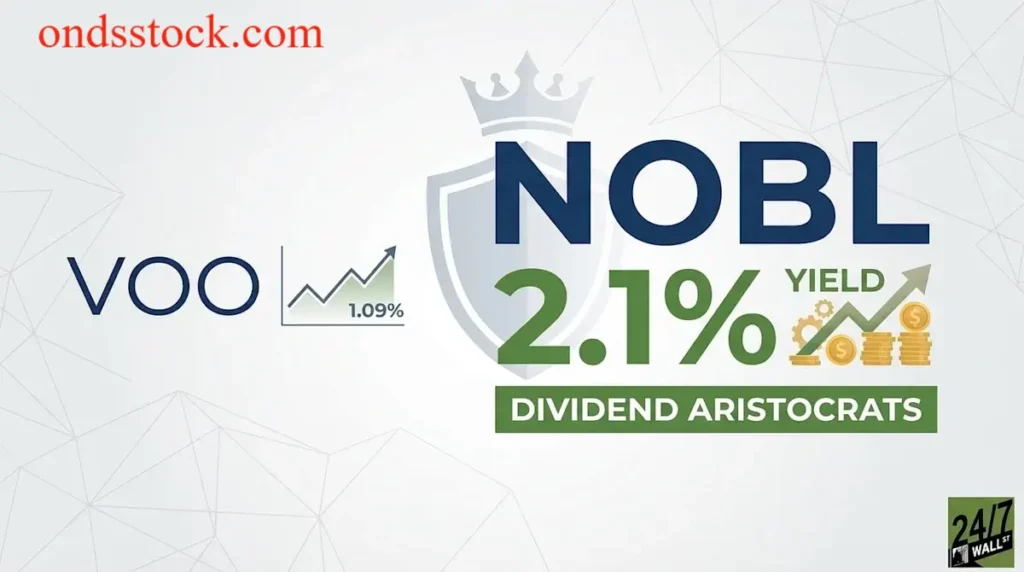
VOO’s dividend distributions have increased over the recent multi-year period, but the growth rate varies.
Recent data shows a trailing dividend growth figure of approximately 5.94% as of the latest cited data.
Dividend growth should be considered alongside:
- Share-price appreciation
- Changes in the S&P 500
- Corporate earnings
- Dividend policies of underlying companies
- Changes in the fund’s distributions
A rising distribution does not guarantee that an investor’s total return will rise by the same percentage.
VOO Dividend vs. S&P 500
VOO is an ETF designed to track the S&P 500, so comparing its dividend with the broader index requires some context.
The S&P 500 itself is an index rather than an investment account that directly sends cash distributions to an investor. VOO provides an investable vehicle that holds securities representing the index and passes through income to shareholders.
The more useful comparison for an investor is often:
| Factor | VOO |
|---|---|
| Investment type | ETF |
| Benchmark | S&P 500 |
| Dividend frequency | Quarterly |
| Primary exposure | U.S. large-cap stocks |
| Income source | Dividends from portfolio holdings |
| Return potential | Dividend income plus capital appreciation |
| Main objective | Broad S&P 500 exposure |
VOO’s total return therefore includes both changes in share price and distributions.
How Much Dividend Does VOO Pay on $10,000?
Using the current trailing yield of approximately 1.05%, a $10,000 investment would generate roughly:
$10,000 × 1.05% = $105 per year
This is an estimate based on the current trailing yield, not a guaranteed future payment.
Using the current trailing dividend of $7.35 per share and the cited price of approximately $701, $10,000 would represent about 14.27 shares before considering transaction details. That would correspond to roughly $105 in trailing annual distributions at the cited rate.
Actual income can differ because VOO’s share price and future distributions change.
How Much Dividend Does VOO Pay on $100,000?
Using the same approximately 1.05% trailing yield:
$100,000 × 1.05% = about $1,050 per year
This illustrates an important point about VOO dividend income: a relatively low yield requires a larger investment to generate substantial cash flow.
For investors primarily seeking income, it can therefore be useful to compare VOO with funds specifically designed around dividend-paying stocks. However, those funds can have different sector exposure, risks, costs, and growth characteristics.
Is VOO Good for Dividend Income?
VOO can provide dividend income, but it is not specifically designed to maximize dividend yield.
Its broader purpose is to provide exposure to the S&P 500. That makes it relevant to investors who want a combination of:
- Broad U.S. equity exposure
- Quarterly distributions
- Long-term capital appreciation potential
- Diversification across major U.S. companies
- Dividend reinvestment opportunities
An investor seeking the highest possible current income may evaluate different securities, while someone focused on broad-market exposure may place more importance on total return.
There is no single dividend strategy that fits every investment timeline or portfolio strategy.
VOO Dividend Reinvestment: How It Works
VOO dividend reinvestment allows an investor to use distributions to purchase additional ETF shares rather than receiving the dividend as cash.
For example, if an investor receives $100 and the brokerage permits fractional-share reinvestment, the $100 can be used to acquire a portion of another VOO share.
Over a long investment timeline, reinvestment can increase the number of shares generating future distributions. This is commonly called compounding.
Investors should check their brokerage’s dividend reinvestment rules because available features, fractional-share treatment, and tax considerations can vary.
VOO Dividend Calculator
A simple VOO dividend calculator can estimate income using the number of shares and an assumed annual dividend.
Estimated Annual Dividend = Number of VOO Shares × Annual Dividend Per Share
For example, using the current trailing annual dividend of $7.35:
- 10 shares × $7.35 = $73.50
- 100 shares × $7.35 = $735
- 500 shares × $7.35 = $3,675
These calculations use the trailing annual payout and are not guarantees of future distributions.
VOO Dividend Forecast and Yield Prediction
There is no reliable way to know the exact future VOO dividend before Vanguard announces the distribution.
A reasonable way to monitor future income is to track:
- Recent quarterly distributions
- Vanguard’s official distribution announcements
- Dividend payments from major S&P 500 holdings
- Changes in the S&P 500’s composition
- VOO’s share price when calculating yield
The 2026 schedule provides payment dates, but it does not guarantee a specific dollar amount for each upcoming distribution. Vanguard’s published schedule identifies September 28/30 and December 21/23 as the remaining scheduled 2026 ex-dividend/payment dates.
What Does VOO’s Dividend Tell Investors?
The dividend is only one part of the VOO investment story.
A useful way to evaluate the fund is to separate income from total return. VOO’s performance can come from both distributions and changes in the value of the underlying stocks.
This matters because a low dividend yield does not necessarily mean a fund has produced little value, just as a high dividend yield does not automatically mean a fund has produced a higher total return.
VOO’s design emphasizes broad-market participation in the S&P 500, making capital appreciation and dividend income parts of the same overall return profile.
Frequently Asked Questions
What is the VOO dividend yield history?
VOO’s dividend yield changes over time because both its distributions and share price change. As of September 2026, the cited trailing yield was approximately 1.05%.
Why is VOO dividend so low?
VOO tracks the S&P 500 rather than targeting the highest-yielding stocks. Many companies in the index prioritize a combination of reinvestment, share repurchases, and dividends, which helps explain why VOO’s yield is relatively modest.
What is VOO dividend yield per year?
As of September 18, 2026, VOO’s trailing dividend yield was approximately 1.05%, based on $7.35 in distributions over the preceding 12 months and the cited share price.
What is the VOO dividend yield prediction?
A precise future yield cannot be known in advance because yield depends on both future distributions and VOO’s share price. Investors can use historical distributions and Vanguard’s announced schedule to monitor the fund, but these do not guarantee future yields.
What is the VOO dividend date?
For the upcoming September 2026 distribution, Vanguard lists September 28, 2026 as the ex-dividend/reinvestment date and September 30, 2026 as the payable date.
Does VOO have a dividend calculator?
Yes. You can estimate dividend income with the formula shares owned × annual dividend per share. Using the current trailing annual payout of $7.35, 100 shares would correspond to approximately $735 in trailing annual distributions.
What was the VOO dividend yield in 2022?
The yield in 2022 varied with VOO’s market price and quarterly distributions. The fund paid approximately $5.95 per share in total distributions during 2022, based on the four historical payments recorded for that year.
What is the VOO dividend growth rate?
The latest cited data reports approximately 5.94% dividend growth. Growth can vary from year to year, so investors should evaluate multiple years of distributions rather than relying on one period.
Also Read
Verizon Dividend History Chart
VFIAX Stock Price Today
MSTY Dividend History 2026