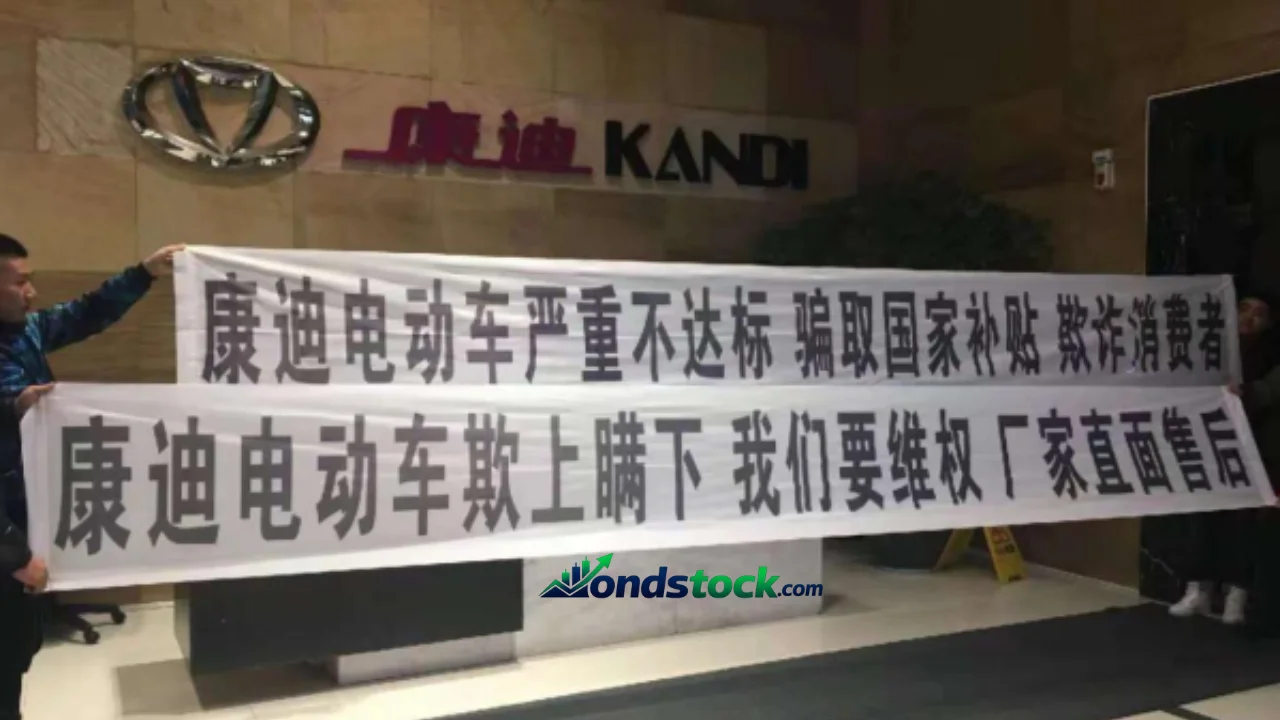
Kandi Technologies Group Inc. attracted attention as a Chinese electric vehicle manufacturer with ambitions to bring affordable electric cars to American consumers. However, its plans faced serious obstacles, including regulatory scrutiny, allegations about reported sales, and difficulties meeting U.S. vehicle requirements. These developments damaged investor confidence and raised questions about the company’s long-term business strategy.
When people ask, “Why did Kandi Technologies fail?” they are often referring to its troubled U.S. expansion, controversy surrounding its financial reporting, and the sharp decline in its stock market reputation. However, the company has not necessarily disappeared or completely shut down. Understanding what happened requires separating documented regulatory findings from allegations, examining its business challenges, and considering what its experience means for investors.
What Is Kandi Technologies Group Inc.?
Kandi Technologies Group Inc. is a Chinese company associated with electric vehicles and related transportation products. Its business has included electric passenger vehicles, off-road utility vehicles, and other small electric transportation products. The company attracted interest because affordable electric vehicles appeared to offer an opportunity in a market increasingly focused on cleaner transportation and lower operating costs.
The company also became known among U.S. investors through its Nasdaq-listed shares under the ticker KNDI. Its American expansion plans attracted attention from consumers seeking inexpensive electric cars and investors hoping to benefit from EV industry growth. However, entering a competitive automotive market requires more than affordable pricing. Manufacturers must also satisfy safety regulations, establish reliable distribution, support customers, and demonstrate that their financial performance can sustain long-term operations.
Why Did Kandi Technologies Fail? The Main Reasons
The question of why Kandi Technologies failed has several dimensions. Its difficulties involved regulatory scrutiny, controversy over reported sales, challenges entering the U.S. passenger vehicle market, and declining investor confidence. These factors affected how investors evaluated the company and whether its growth ambitions appeared realistic.
However, it would be misleading to attribute every business problem to a single event or claim that all allegations were proven. The U.S. Securities and Exchange Commission, or SEC, took formal action in 2023 over materially misleading statements and omissions concerning planned electric vehicle launches. Separately, Hindenburg Research published allegations about Kandi’s reported sales in 2020. Understanding these developments requires distinguishing the short-seller’s claims from the SEC’s findings and settlement.
Controversy Surrounding Hindenburg Research’s Report
In November 2020, short-selling research firm Hindenburg Research published a critical report alleging that Kandi had fabricated a substantial portion of its reported sales through undisclosed related-party transactions. The report claimed that approximately 64% of the company’s last-twelve-month sales were questionable and alleged that Kandi had used EV market excitement to attract approximately $160 million from U.S. investors.
The report also highlighted financial indicators that its authors considered suspicious, including unusually high days sales outstanding and frequent changes in chief financial officers. Kandi disputed the allegations and challenged the report’s accuracy. These accusations should therefore be identified as claims made by a short seller, rather than automatically treated as established facts. Nevertheless, the controversy intensified scrutiny of the company’s financial reporting and contributed to uncertainty among investors.

SEC Investigation and the 2023 Settlement
The SEC’s September 2023 action was an important development in Kandi’s history. According to the SEC’s administrative order, the company made materially misleading statements and omissions about its plans to launch highway passenger electric vehicles in the United States. The order addressed statements made during 2019 and 2020 and raised concerns about how the company communicated its U.S. expansion plans to investors.
Kandi agreed to settle the SEC action, accepted a cease-and-desist order, and paid a $710,000 civil penalty. The company neither admitted nor denied the findings in the settlement, according to its annual filing. This distinction matters because the SEC action concerned statements about planned vehicle launches, while Hindenburg’s separate report made broader allegations about sales. Investors should examine each issue on its own evidence rather than treating every allegation as a proven violation.
Why Kandi Technologies Struggled in the U.S. EV Market
Entering the American automotive market requires manufacturers to meet strict safety requirements and build trust with customers. A vehicle must satisfy applicable federal standards before it can be marketed and sold for ordinary road use. Kandi’s plans to introduce affordable highway passenger EVs therefore depended on regulatory compliance, product readiness, and an effective sales strategy. Announcing an ambitious launch without successfully delivering compliant vehicles can weaken confidence in a company’s ability to execute its plans.
The SEC’s order stated that Kandi’s planned highway passenger EVs had not met all applicable U.S. safety standards and had not been sold to U.S. consumers as represented in the relevant disclosures. This created a major obstacle to the company’s original expansion ambitions. Instead of establishing a strong position in mainstream electric passenger cars, Kandi faced the challenge of finding commercially viable opportunities in other vehicle categories.
Kandi Technologies Revenue and Financial Performance
Revenue is one of the most important indicators when assessing whether an automotive company has a sustainable business. However, revenue alone cannot show whether a company is financially healthy. Investors also need to examine gross profit, operating expenses, cash flow, outstanding liabilities, and the quality of reported sales. A company can report substantial revenue while still struggling to collect payments or turn sales into consistent profits.
To understand Kandi Technologies’ financial position, readers should compare its latest annual filing with earlier reports and examine whether its business is growing sustainably. Pay particular attention to revenue trends, operating results, customer concentration, and disclosures about related-party transactions. The company’s latest annual report for the year ended December 31, 2025, is available through the SEC. Use the reported figures directly rather than relying on unsourced estimates or outdated financial summaries.

| Financial indicator | Why it matters |
|---|---|
| Revenue | Shows the value of reported sales over a period |
| Gross profit margin | Helps measure profitability after direct production costs |
| Operating income or loss | Reveals whether core business operations are profitable |
| Operating cash flow | Indicates how much cash the business generates or consumes |
| Accounts receivable | Helps assess whether customers are paying on time |
| Related-party transactions | Highlights relationships that investors may need to examine carefully |
Kandi Technologies Stock Price and Investor Confidence
Kandi Technologies’ stock performance became a major concern for investors after the November 2020 short-seller report. The report attracted significant attention, and contemporary market coverage described a sharp fall in the share price. Such movements demonstrate how quickly investor sentiment can change when questions arise about a company’s financial disclosures, business relationships, or growth prospects.
However, a falling share price does not automatically prove that a company has failed. Stock prices reflect expectations about future earnings, uncertainty, liquidity, and perceived risk, as well as actual financial performance. Anyone researching the Kandi Technologies stock price should compare historical prices with company announcements, quarterly results, and regulatory developments. Current quotes should be checked through a reliable market data provider because prices and trading conditions change over time.
Kandi Technologies Fraud Allegations and Legal Concerns
Searches for Kandi Technologies fraud largely reflect the controversy surrounding its reported sales and financial disclosures. Hindenburg Research alleged that undisclosed relationships between the company and certain customers raised questions about the reliability of reported revenue. Securities litigation also followed the publication of the report. These developments explain why transparency, independent verification, and the quality of financial reporting became central concerns for investors.
The SEC’s later settlement established findings concerning misleading statements and omissions about planned U.S. vehicle launches, but it should not be misrepresented as a blanket confirmation of every allegation in the short-seller report. A responsible article should identify who made each claim, explain the outcome of any official proceeding, and distinguish allegations from established findings. This approach gives readers a more accurate understanding of Kandi’s regulatory history without overstating what the available evidence proves.
Kandi Technologies K22 Refresh and Its Product Strategy
Kandi has pursued opportunities beyond mainstream highway passenger cars, including smaller electric vehicles and off-road utility products. The K22 Refresh is one of the model names associated with its electric vehicle lineup. These product categories can serve different customers and operating environments, but their commercial potential depends on pricing, availability, regulatory requirements, and customer demand. A vehicle that attracts attention online does not necessarily translate into high sales or lasting profitability.
For Kandi, a sustainable product strategy requires more than offering vehicles at competitive prices. The company must demonstrate that its products meet applicable requirements, deliver acceptable quality, and generate enough demand to support production and distribution costs. Investors should also check current product specifications and availability through official company materials. Historical launch announcements alone cannot establish whether a particular model is currently available or contributing meaningfully to revenue.
Kandi Technologies News and Recent Developments
Recent company announcements and regulatory filings can help readers understand how Kandi’s business has evolved since the controversies of 2020 and the SEC settlement in 2023. The company’s annual reports provide information about financial performance, risks, operations, and significant developments. Investors should start with these primary documents before relying on headlines, online discussions, or third-party commentary.
Trade policy is another issue worth monitoring. Kandi’s 2025 annual filing discusses a preliminary U.S. Department of Commerce determination announced in January 2025 concerning antidumping duties on certain Chinese low-speed personal transportation vehicles. The filing identifies Kandi Hainan as one of the companies under investigation. This development illustrates how trade measures can affect market access, costs, and competitiveness, although its precise financial impact must be assessed using the relevant official findings and company disclosures.
Kandi Technologies Stock Prediction and Future Outlook
Predicting KNDI’s future share price requires evaluating the company’s financial condition, operating performance, competitive position, and ability to manage regulatory and trade risks. Investors should not base a forecast solely on past price declines or expectations that electric vehicle demand will continue growing. Even when an industry expands, individual companies can struggle if their products lack a clear advantage or their costs remain too high.
A practical assessment should consider three possible scenarios. An optimistic scenario would involve stronger demand, improved financial performance, and successful execution of the company’s product strategy. A neutral scenario would involve uneven sales and continued pressure from competition. A pessimistic scenario would involve persistent losses, weak demand, or additional regulatory and trade challenges. These are analytical possibilities, not predictions or guarantees, and each scenario should be evaluated against current financial data.

Is Kandi Technologies Stock Worth Watching?
KNDI may interest investors researching small-cap electric vehicle companies, but its history makes careful due diligence especially important. Investors should review the latest annual and quarterly reports, assess cash flow and profitability, and check whether management’s announcements are supported by measurable results. They should also consider trading liquidity, share dilution, competitive pressures, and the possibility that a low share price reflects substantial business risks.
Before making an investment decision, consider these practical checks:
- Compare revenue, gross margins, and operating results over several reporting periods.
- Review cash balances, liabilities, and the company’s ability to fund its operations.
- Read official disclosures about legal matters, related-party transactions, and regulatory risks.
- Verify current vehicle offerings and determine whether they contribute meaningfully to sales.
- Compare KNDI with competitors using financial and operational measures, not share price alone.
No single indicator can determine whether the stock is attractive. The strongest assessment combines financial evidence with a realistic view of the company’s ability to execute its strategy.
What Investors Can Learn From Kandi Technologies
Kandi’s experience highlights the difference between an appealing business opportunity and a proven business model. Affordable electric vehicles may attract customers and investors, but manufacturers must still meet safety standards, deliver products on schedule, maintain reliable customer relationships, and manage costs. When expansion plans fail to translate into commercial results, expectations can change quickly, particularly for companies whose market valuations depend heavily on future growth.
The case also shows why investors should examine how a company reports its sales and communicates major milestones. Independent research can identify questions worth investigating, while regulatory filings can clarify what authorities have formally established. Neither promotional announcements nor negative commentary should replace careful analysis. Looking at several years of financial results, disclosures, and operating progress offers a more balanced way to judge a company’s prospects.
Conclusion: Why Did Kandi Technologies Fail?
The question of why Kandi Technologies failed is best understood as a story of damaged investor confidence, regulatory setbacks, and difficulties executing its U.S. electric vehicle ambitions. Hindenburg Research’s 2020 report raised serious allegations about reported sales, while the SEC’s 2023 settlement addressed materially misleading statements and omissions about planned U.S. highway passenger EV launches. These were significant developments, but they do not mean the company completely shut down.
Kandi’s longer-term prospects depend on its ability to produce credible financial results, compete effectively, manage regulatory and trade risks, and build sustainable demand for its products. Readers should verify the company’s latest financial reports and official announcements before drawing conclusions about its current condition. For investors, the central lesson is simple: evaluate business performance and documented evidence rather than relying on stock price movements or headlines alone.
Frequently Asked Questions
Why did Kandi Technologies fail?
Kandi faced serious investor confidence issues, allegations about reported sales, SEC action over misleading statements, and challenges launching highway passenger EVs in the United States.
Is Kandi Technologies still in business?
Kandi Technologies has not been established as completely shut down; check its latest SEC filings and official company announcements for its current operating status.
What happened to Kandi Technologies stock?
KNDI shares came under pressure following the 2020 short-seller report and subsequent scrutiny, although current performance must be checked using recent market data.
What is the current Kandi Technologies stock price?
The current KNDI share price changes during trading, so consult a reliable financial data provider for the latest quote and trading information.
Did Kandi Technologies commit fraud?
Hindenburg Research alleged sales-related misconduct, while the SEC’s 2023 settlement concerned misleading statements and omissions about planned U.S. EV launches; these matters should be distinguished carefully.
What is Kandi Technologies’ revenue?
Kandi’s revenue varies by reporting period, and its latest annual and quarterly SEC filings provide the most reliable figures for assessing sales performance.
What is the Kandi K22 Refresh?
The Kandi K22 Refresh is a model associated with the company’s electric vehicle lineup, and its current specifications and availability should be verified through official materials.
Is KNDI stock a good investment?
KNDI carries business, regulatory, competitive, and financial risks, so investors should review current filings and their own risk tolerance before making a decision.
Also Read…