
Introduction
Have you ever wondered who keeps the internet running at 3 AM?
Every time you stream a video, send an email, or use a cloud app, a data center technician is working behind the scenes to make it all possible. These professionals are the unsung heroes of the digital world. They maintain the physical infrastructure that keeps global businesses alive.
In this guide, you will learn everything you need to know about becoming a data center technician. We cover daily responsibilities, required skills, salary expectations, certifications, and how to grow your career fast. Whether you are just starting out or looking to make a career switch, this article gives you a clear and honest picture of what this role really involves.
What Is a Data Center Technician?
A data center technician is an IT professional who manages, maintains, and repairs the hardware and infrastructure inside a data center. Think of them as the hands-on experts who keep servers, storage systems, and networking equipment running smoothly around the clock.
Data centers are the physical backbone of the internet. They house thousands of servers in tightly controlled environments. A data center technician is responsible for keeping those environments stable, secure, and operational.
This role is very different from a software developer or network engineer sitting at a desk. A data center technician works on physical equipment. They rack and stack servers, run cables, replace failed components, and respond to hardware alerts.
Every major tech company, bank, hospital, and government agency relies on data centers. That means the demand for a skilled data center technician is not slowing down anytime soon.
Why This Career Is Booming Right Now
The tech industry is growing at a staggering rate. According to research firm Mordor Intelligence, the global data center market is expected to exceed $500 billion by 2029. That kind of growth does not happen without a massive workforce behind it.
Here is why the data center technician role is more valuable than ever:
- Cloud computing is exploding. Companies like AWS, Microsoft Azure, and Google Cloud are building new facilities every month.
- AI is driving massive infrastructure investment. Training large AI models requires enormous computing power, and that power lives inside data centers.
- Remote work created a surge in demand. Businesses moved more operations online after the COVID-19 pandemic, which pushed data center usage to record highs.
- 5G and edge computing are expanding the need. Smaller, distributed data centers are popping up everywhere to support faster connectivity.
The U.S. Bureau of Labor Statistics projects steady growth in computer and information technology occupations. The data center technician career sits right at the heart of that expansion.
What Does a Data Center Technician Actually Do?
The day-to-day work of a data center technician is more varied than most people expect. You are not just staring at screens. You are physically active, solving real problems in real time.
Hardware Installation and Maintenance
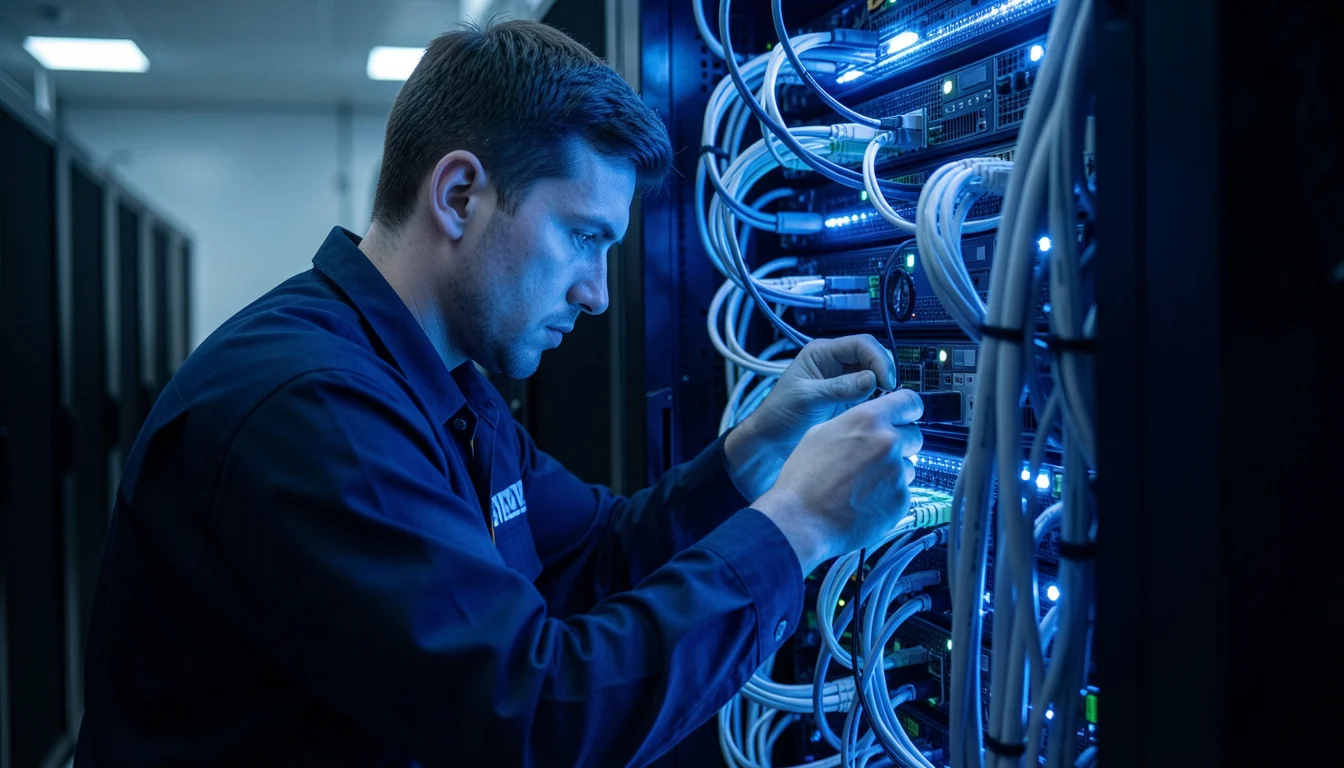
A data center technician installs servers, storage arrays, and networking switches into server racks. This process is called “racking and stacking.” You follow detailed documentation and use hand tools to mount equipment precisely.
Once hardware is installed, a data center technician runs and manages cables. Proper cable management keeps airflow clean and troubleshooting easier. A messy cable layout can cause overheating and makes identifying issues significantly harder.
Monitoring and Incident Response
Every data center runs a monitoring system that tracks server health, temperature, power usage, and network traffic. A data center technician watches these dashboards and responds to alerts.
When something breaks, the data center technician is the first person on the ground. You diagnose the issue, replace failed components, and restore service as fast as possible. Speed matters, because downtime can cost companies thousands of dollars per minute.
Environmental Management
Data centers require very specific conditions. Temperature must stay between 65 and 75 degrees Fahrenheit. Humidity must be controlled. Power systems must be redundant.
A data center technician monitors HVAC systems, cooling units, and power distribution units (PDUs). You check UPS (uninterruptible power supply) batteries and ensure backup generators are ready.
Vendor Coordination and Documentation
A data center technician often works with hardware vendors to schedule repairs or part replacements. You log every action you take in a ticketing system. Good documentation is critical for audits, compliance checks, and future troubleshooting.
Key Skills Every Data Center Technician Needs
You do not need to know everything on day one. But certain skills will help you land your first role and grow faster once you are in.
Technical Skills
- Hardware knowledge: You need to understand server components, storage systems, and networking equipment. Knowing brands like Dell, HP, Cisco, and Juniper gives you a real advantage.
- Networking basics: A data center technician should understand TCP/IP, subnetting, VLANs, and basic routing concepts.
- Operating systems: Familiarity with Linux and Windows Server is essential. Many data center environments run both.
- Cabling: Knowing the difference between fiber, Cat6, and coaxial cables is a practical must-have skill.
- Power and cooling: Understanding how PDUs, UPS systems, and CRAC units work will set you apart.
Soft Skills
- Attention to detail: A data center technician cannot afford mistakes. One wrong cable or a missed step in a server build can cause hours of downtime.
- Problem-solving mindset: You will face issues that are not in any manual. Thinking calmly and logically under pressure is critical.
- Communication: You will coordinate with remote support teams, vendors, and managers. Clear and concise communication saves time and prevents errors.
- Physical fitness: The job involves lifting heavy equipment, standing for long periods, and working in tight server rows. Being physically ready helps a lot.
How to Become a Data Center Technician
There is more than one path into this career. Here is a realistic breakdown of how most people get started.
Step 1: Get the Right Education
Most data center technician roles require at least a high school diploma or GED. An associate degree in Information Technology, Computer Science, or Electronics gives you a strong foundation. Some four-year programs offer dedicated data center tracks too.
That said, many successful data center technicians are self-taught or came from trade school backgrounds. What matters more is demonstrated knowledge and certifications.
Step 2: Earn Entry-Level Certifications
Certifications signal to employers that you know your fundamentals. Start with CompTIA A+, which covers core hardware and troubleshooting skills. Then move to CompTIA Network+ for networking basics.
These two certifications alone can get you an interview as a junior data center technician at many companies.
Step 3: Gain Hands-On Experience
Build a homelab if you can. Buy used servers on eBay. Install Linux. Practice cabling. Learn to use a KVM switch and out-of-band management tools.
You can also pursue internships or entry-level IT help desk roles to build experience before transitioning into a full-time data center technician position.
Step 4: Apply Strategically
Target companies that operate large data centers. Major cloud providers, colocation facilities like Equinix and Digital Realty, financial institutions, and healthcare companies are all great starting points.
Data Center Technician Salary: What to Expect
Money matters, so let us talk numbers.
According to data from the U.S. Bureau of Labor Statistics and industry salary surveys, here is what a data center technician can expect to earn:
| Experience Level | Average Annual Salary (U.S.) |
|---|---|
| Entry-Level (0 to 2 years) | $42,000 to $55,000 |
| Mid-Level (3 to 5 years) | $55,000 to $75,000 |
| Senior-Level (6 or more years) | $75,000 to $100,000 |
| Lead or Supervisor Role | $95,000 to $120,000 |
Location affects pay significantly. A data center technician in San Francisco or New York typically earns 20 to 30 percent more than someone in a smaller market. Companies like Google, Meta, and Amazon also tend to pay above industry averages.
Benefits packages often include health insurance, retirement plans, and shift differentials for nights or weekends. Some employers offer tuition reimbursement to support further certifications.
Career Growth and Advancement Opportunities
One thing I love about this field is the clear path upward. You do not have to stay at the entry level forever. A data center technician who stays curious and keeps learning can move into some excellent senior roles.
Here are common career paths from a starting data center technician position:
- Senior Data Center Technician: More complex tasks, mentoring junior staff, leading projects.
- Data Center Operations Manager: Overseeing a team of technicians, managing vendor relationships, and ensuring SLA compliance.
- Network Engineer: For those who develop deep networking expertise while on the floor.
- Systems Administrator: For those who shift focus toward server management and software configuration.
- Cloud Infrastructure Engineer: Bridging physical hardware knowledge with cloud platforms like AWS or Azure.
- Data Center Facilities Manager: Managing the physical building, power, and cooling infrastructure at a strategic level.
Best Certifications for a Data Center Technician
Certifications speed up your career growth and often translate directly into higher pay. Here are the most respected credentials in the field.
Foundation Level
- CompTIA A+: The standard entry-level IT certification. Perfect for new data center technician candidates.
- CompTIA Network+: Covers networking fundamentals that every data center professional needs.
Intermediate Level
- Cisco CCNA: Validates your networking skills with one of the most recognized names in the industry.
- CompTIA Server+: Specifically focused on server hardware and administration. Very relevant for a data center technician role.
- VMware VCP: Valuable for virtualization skills that are increasingly common in modern data centers.
Advanced and Vendor-Specific
- Cisco CCNP: Advanced networking for those moving into senior or engineering roles.
- AWS Certified Solutions Architect: Bridges your physical data center knowledge with cloud platforms.
- Uptime Institute ATD (Accredited Tier Designer): Recognized globally for data center design expertise.
- BICSI DCDC (Data Center Design Consultant): Respected in the data center infrastructure community.
A Day in the Life of a Data Center Technician
You might be wondering what an actual workday looks like. Here is a realistic picture.
Morning Shift (7 AM to 3 PM):
You arrive, review the overnight tickets, and walk the floor to check for any visual alerts. You respond to a server hardware failure that was flagged at 5 AM. You replace a failed hard drive, confirm the RAID rebuilt successfully, and close the ticket.
Then you handle a scheduled deployment. A client ordered three new servers. You rack them, connect power and network cables, and perform initial BIOS configuration. You document every step in the ticketing system.
Afternoon Tasks:
You join a call with a vendor about a UPS battery replacement scheduled for next week. You conduct a physical audit of a specific server row to ensure all cables are labeled and organized. You notice a cooling unit is running slightly warm and escalate the issue to facilities before it becomes a bigger problem.
A data center technician who pays attention to small signs prevents large outages. That proactive mindset is what separates good technicians from great ones.
Common Challenges You Will Face
No career is without its hard parts. Here are some honest challenges you should prepare for.
Shift Work and Odd Hours
Data centers operate 24 hours a day, 7 days a week. A data center technician often works night shifts, weekends, and holidays. This is a real trade-off you need to consider before entering the field.
High-Pressure Situations
When a critical system fails, the pressure to restore service fast is intense. A data center technician needs to stay calm and methodical even when managers and clients are calling for updates every few minutes.
Repetitive Physical Tasks
Racking servers and running cables is physically demanding. You will lift heavy equipment and crouch in tight spaces regularly. Over time, this can cause wear on your body if you do not practice good ergonomics.
Keeping Up With Technology
Hardware and software evolve quickly. A data center technician who stops learning will fall behind. Staying current with new certifications and technologies is essential for long-term career success.
Top Tools and Technologies You Should Know
Being familiar with the right tools makes a data center technician far more effective on the job.
Physical Tools:
- Torque screwdriver and ratchet set
- Cable tester and toner probe
- Label maker for cable and port identification
- Crash cart (portable KVM for console access)
Software and Platforms:
- DCIM (Data Center Infrastructure Management) tools like Nlyte or Sunbird
- IPMI and iDRAC for out-of-band server management
- Ticketing systems like ServiceNow or Jira
- Monitoring platforms like Nagios, Zabbix, or Datadog
Networking Equipment:
- Cisco, Juniper, or Arista switches and routers
- Patch panels and structured cabling systems
- Fiber and copper optic transceivers
A well-rounded data center technician knows both the physical tools and the digital platforms that support day-to-day operations.
Conclusion
The role of a data center technician is challenging, rewarding, and built for growth. You will work with cutting-edge hardware, solve real problems under pressure, and play a vital role in keeping the digital world running. The demand for skilled professionals in this field is growing every year, and the career paths available to an experienced data center technician are genuinely exciting.
If you are considering this career, start with the foundational certifications, build hands-on experience, and never stop learning. The industry rewards people who take initiative and stay curious.
Are you already working as a data center technician, or are you just getting started? Drop your questions or share your experience in the comments. Your story might help someone else make the leap.
FAQs
1. What qualifications do I need to become a data center technician? You typically need a high school diploma or associate degree in IT, along with certifications like CompTIA A+ or Network+. Hands-on experience with hardware and networking is also very valuable.
2. Is being a data center technician a good career? Yes. It offers strong job stability, competitive pay, and clear paths for advancement. The growing demand for cloud and AI infrastructure makes this role even more secure.
3. How long does it take to become a data center technician? You can qualify for entry-level positions in 6 to 12 months if you focus on the right certifications and build practical experience through a homelab or internship.
4. What is the difference between a data center technician and a network engineer? A data center technician focuses primarily on physical hardware installation, maintenance, and operations. A network engineer focuses more on designing and configuring network infrastructure, often with less hands-on hardware work.
5. Do data center technicians need to know programming? Not at the entry level. However, basic scripting knowledge in Python or Bash is becoming increasingly useful, especially for automation tasks.
6. What companies hire data center technicians? Major employers include Amazon Web Services, Google, Microsoft, Equinix, Digital Realty, IBM, and large financial institutions and healthcare providers.
7. Can a data center technician work remotely? This role is primarily on-site because it involves hands-on hardware work. However, some planning and documentation tasks can be done remotely.
8. What is the biggest challenge for a data center technician? Balancing the pressure of rapid incident response with the precision required for hardware work. Staying calm under pressure while maintaining accuracy is the hardest skill to master.
9. Is the data center industry growing? Yes. The global data center market is projected to grow significantly through 2029, driven by cloud computing, AI, and edge computing expansion.
10. What is the career path after being a data center technician? You can move into roles like senior technician, operations manager, systems administrator, network engineer, or cloud infrastructure engineer, depending on your interests and skills.
About the Author:
Johan Harwen is a seasoned IT professional and career writer with over 10 years of experience in data center operations and enterprise infrastructure. He has worked with Fortune 500 companies and cloud providers, helping build and maintain large-scale data center environments. James now writes practical career guides to help aspiring IT professionals navigate the tech industry with confidence. Connect with him on LinkedIn or reach out through his website.
Also read ondsstock.com
Email: johanharwen314@gmail.com
Author Name: Johan Harwen