
GPC stock represents Genuine Parts Company, a global distributor of automotive and industrial replacement parts. Founded in 1928, the company has built a long-standing presence in the replacement parts market through businesses such as NAPA Auto Parts and Motion Industries. Investors often examine its dividend, financial performance, valuation, and growth prospects when deciding whether the shares deserve a place in their portfolios.
The latest market snapshot provided for October 28, 2026, lists the shares at $121.54, with a market capitalization of $16.78 billion and a dividend yield of 3.50%. However, a stock’s appeal depends on more than its current price or dividend. Understanding the company’s business model, earnings outlook, competitive position, and potential risks can help investors make a more informed decision.
What Is GPC? Understanding Genuine Parts Company
Genuine Parts Company is an American distribution business headquartered in Atlanta, Georgia. Established in 1928, it supplies replacement parts and related products to customers across automotive and industrial markets. Rather than relying on a single product category, the company serves different customer groups through specialized distribution networks, helping businesses obtain the parts they need to maintain vehicles, equipment, and industrial operations.
Its two major businesses are NAPA Auto Parts and Motion Industries. NAPA focuses on automotive replacement parts and related products, while Motion distributes industrial components and maintenance supplies. This combination gives the company exposure to both vehicle repair demand and industrial activity. For investors, the diversified business model is important because the factors affecting automotive sales and industrial spending do not always move in the same direction.
GPC Stock Price: Latest Quote and Market Performance
The supplied market data places the shares at $121.54 on October 28, 2026, at 1:46 p.m. Eastern Daylight Time. The stock recorded an opening price of $121.80, a daily high of $122.50, and a low of $121.22. These figures provide a snapshot of trading activity, but investors should check a live market source before making decisions because prices change throughout the trading session.
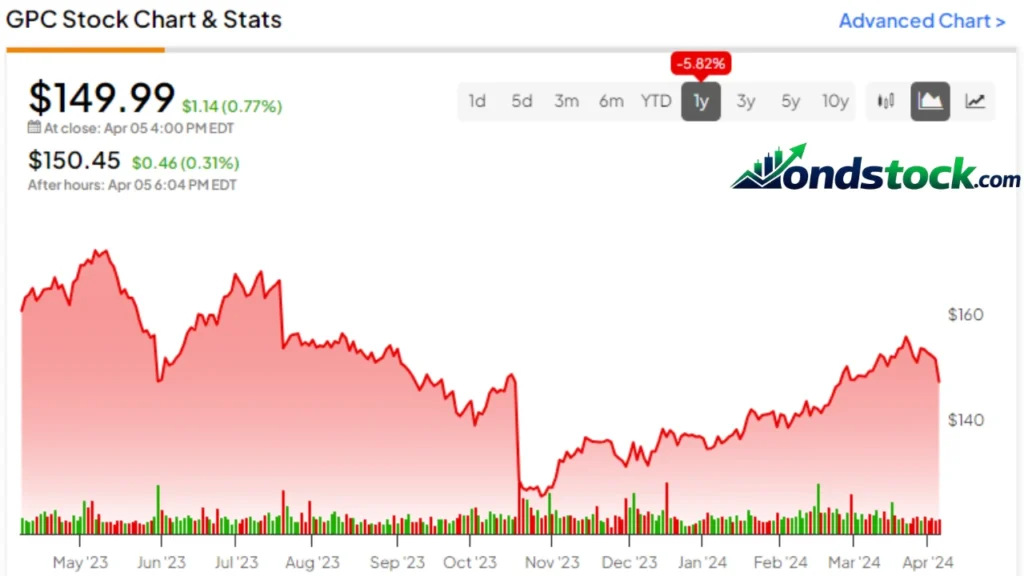
The reported 52-week range extends from $90.78 to $151.57. This range shows how widely the stock price has moved over the past year, although it does not predict where the shares will trade next. Comparing the current quote with historical prices, earnings results, and valuation measures provides a more complete picture of performance.
| Market metric | Supplied figure |
|---|---|
| Stock ticker | NYSE: GPC |
| Share price | $121.54 |
| Daily change | -$0.26 (-0.21%) |
| Market capitalization | $16.78 billion |
| P/E ratio | 486.65 |
| Dividend yield | 3.50% |
| Quarterly dividend amount | $1.06 |
| 52-week high | $151.57 |
| 52-week low | $90.78 |
Source: Market snapshot supplied for October 28, 2026. Figures can change and should be verified before publication or investment decisions.
The reported P/E ratio deserves particular attention. A ratio of 486.65 is unusually high for a mature distributor and may reflect unusually low reported earnings, a temporary accounting effect, or a data issue. Investors should verify the earnings period and calculate the ratio using comparable earnings figures before drawing conclusions about valuation. A high P/E alone does not establish whether a stock is overvalued.
Genuine Parts Company Financial Performance and Earnings
The company’s financial performance depends on replacement parts demand, distribution efficiency, pricing, and operating expenses. Automotive customers need replacement components to keep vehicles running, while industrial customers purchase products to maintain machinery and equipment. These recurring needs can support demand across economic cycles, although customers may delay purchases or reduce spending when budgets tighten. Revenue growth is therefore only one part of the financial picture; margins and cash generation also matter.
When reviewing earnings, investors should examine revenue, operating income, net income, earnings per share, and free cash flow. Comparing these measures across several quarters can reveal whether the business is improving or facing pressure. Management’s guidance also matters because it provides insight into expected demand, costs, and business priorities. Before publishing an earnings analysis, use the company’s latest financial statements rather than relying on estimates or outdated figures.
Important financial indicators to review include:
- Revenue growth across automotive and industrial operations.
- Operating margins and the company’s ability to manage expenses.
- Earnings per share and changes in profitability.
- Free cash flow available for dividends, debt reduction, and investment.
- Management guidance and any changes to full-year expectations.
GPC Stock Dividend: Yield, History, and Income Potential
The supplied market snapshot reports a dividend yield of 3.50% and a quarterly dividend amount of $1.06. These figures suggest that dividends may be an important part of the investment case for income-focused shareholders. However, investors should verify the latest declared dividend, its ex-dividend date, and its payment date through official company announcements before calculating expected income.
Dividend yield measures annual dividend payments relative to the share price. If the share price falls while the dividend remains unchanged, the yield rises; if the price increases, the yield falls. This means a higher yield does not automatically indicate a better investment. Investors should also examine earnings coverage, free cash flow, debt obligations, and the company’s dividend history to assess whether future payments appear sustainable.
For example, using the supplied quarterly dividend figure of $1.06, four unchanged quarterly payments would total $4.24 per share annually. At a share price of $121.54, that would imply an annualized yield of approximately 3.49%, close to the reported 3.50%. This is an illustration based on the supplied figures, not a guarantee of future payments. Actual dividends may change, and share-price movements can affect total returns.
GPC Stock Forecast for 2026 and Beyond
The future outlook for Genuine Parts Company depends on several factors, including automotive repair demand, industrial activity, pricing, acquisition performance, and operating efficiency. A large network of distribution businesses can provide a competitive advantage, but it does not eliminate the effects of slower economic growth or rising operating costs. Investors should monitor quarterly results and management guidance to determine whether the company’s performance supports optimistic expectations.
Rather than treating a single analyst target as a reliable prediction, investors can consider three possible scenarios. A bullish scenario could involve stronger demand, improved margins, and better-than-expected earnings. A base case might assume moderate business growth with relatively stable profitability. A bearish scenario could involve weaker industrial spending, higher costs, or disappointing earnings. These are illustrative possibilities, not verified forecasts or predictions of future prices.
When reviewing analyst estimates, check the publication date, assumptions, and forecast period. Price targets can become outdated after earnings releases or changes in market conditions. Investors should also distinguish between short-term trading expectations and long-term business prospects. A useful forecast explains which financial developments could support or weaken the investment case instead of suggesting that the stock must reach a particular price.
Is GPC Stock a Good Buy in 2026?
Whether the shares represent an attractive investment depends on the price paid, the company’s earnings outlook, dividend sustainability, and an investor’s goals. Genuine Parts Company operates established distribution businesses serving automotive and industrial customers. Its broad market presence and recurring replacement-parts demand may appeal to investors who value established operations, but the company’s future results still depend on competition, execution, and economic conditions.
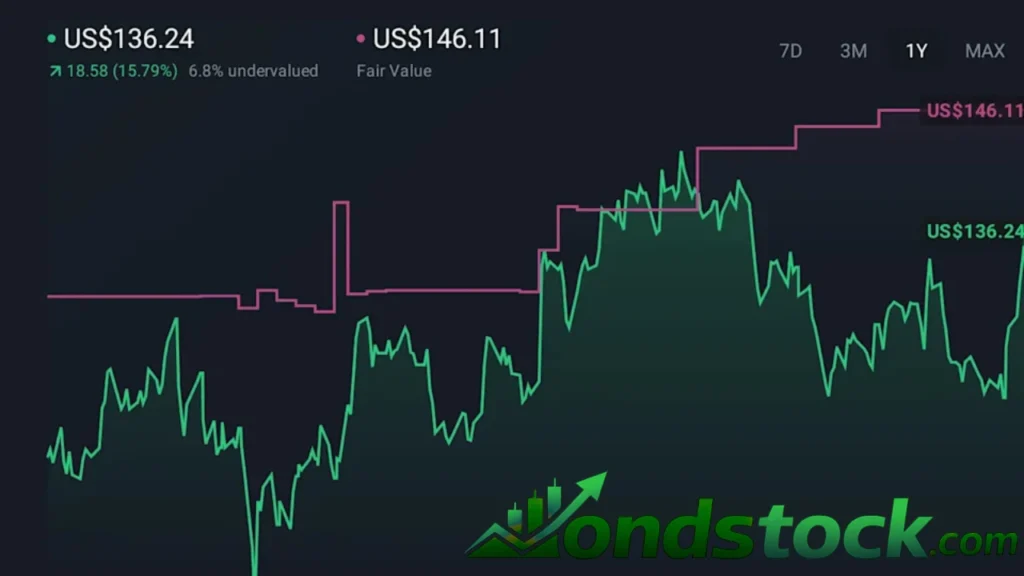
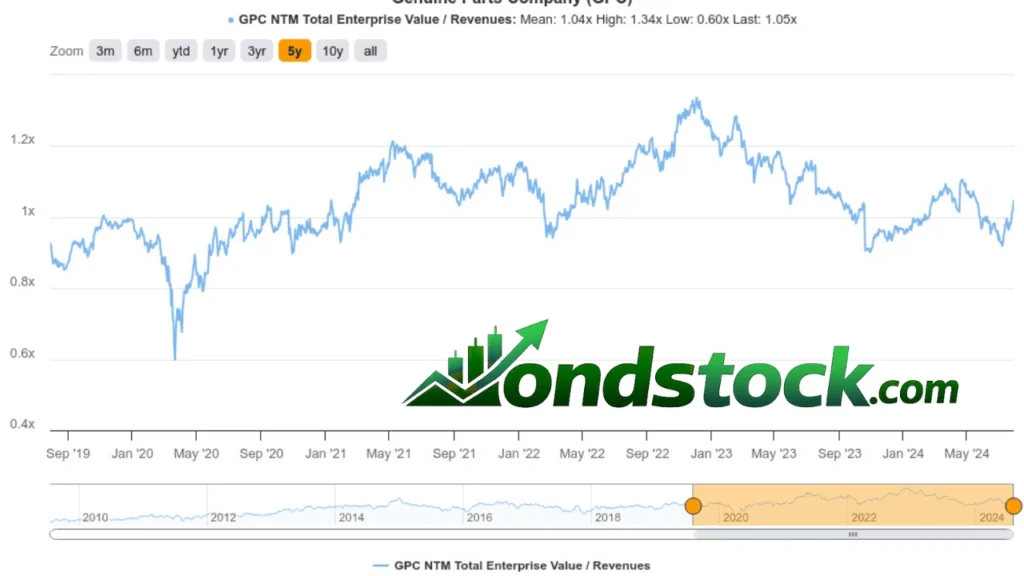
Valuation is particularly important when assessing the opportunity. The supplied P/E ratio of 486.65 is unusually elevated and needs verification against the company’s latest reported earnings. Investors should review adjusted and generally accepted accounting principles (GAAP) earnings where appropriate, while understanding the reasons for any differences. Comparing price-to-earnings ratios, free cash flow, and dividend yields with relevant competitors can help establish whether the current price offers a reasonable margin of safety.
Before making a decision, consider these points:
- Does the company’s latest earnings report support its current valuation?
- Is the dividend supported by recurring cash flow?
- Are automotive and industrial operations showing healthy demand?
- How does the valuation compare with relevant competitors?
- Does the investment fit your time horizon and tolerance for losses?
A balanced decision should rely on verified financial results rather than dividend yield or recent share-price movements alone. Even a well-established company can deliver disappointing returns when investors pay too much for its earnings or when business conditions deteriorate.
Key Risks of Investing in Genuine Parts Company
Economic conditions can influence both sides of the company’s business. Automotive repair demand may remain relatively resilient because vehicles require maintenance, but customers can still postpone repairs or choose less expensive parts. Industrial customers may delay equipment purchases or maintenance projects when business confidence weakens. These pressures can affect sales, margins, and inventory turnover, particularly when costs rise faster than revenue.
Competition, supplier relationships, acquisition integration, and operating expenses also deserve attention. Distributors must maintain product availability while managing inventory and delivery costs. Poor purchasing decisions or weaker demand can leave a business holding excess stock, while supplier price increases may put pressure on margins. Investors should review debt levels, cash flow, and management’s response to changing conditions instead of assuming that the company’s established market position guarantees future success.
GPC Stock Compared With Other Dividend and Automotive Stocks
Comparing Genuine Parts Company with similar businesses can help investors understand its valuation and income potential. Relevant comparisons may include automotive aftermarket distributors and industrial distribution companies. However, companies with different product mixes, geographic exposure, growth rates, and debt levels may deserve different valuations. A useful comparison focuses on business quality and financial performance rather than share price alone.
Investors should compare the latest dividend yield, earnings growth, operating margins, free cash flow, and valuation ratios across selected peers. The comparison should use figures from similar reporting periods and clearly identify any differences in accounting measures. A stock with a lower yield may offer stronger earnings growth, while a higher yield may reflect weaker market expectations. Neither outcome automatically makes one company the better investment.
How to Buy GPC Stock: A Beginner’s Guide
Investors interested in purchasing shares can begin by researching a regulated brokerage that provides access to the New York Stock Exchange. Search for Genuine Parts Company using its ticker, GPC, and confirm the company’s identity before placing an order. Depending on the brokerage, investors may have access to market orders, limit orders, dividend reinvestment options, and research tools that help them manage their investments.
International investors should also review account eligibility, currency conversion costs, tax treatment, and applicable local regulations. A market order generally seeks immediate execution at available prices, while a limit order sets a maximum purchase price. Neither order type removes investment risk. Before investing, review the company’s filings and financial performance, consider diversification, and avoid committing money that may be needed for near-term expenses.
Conclusion
Genuine Parts Company offers exposure to automotive replacement parts and industrial distribution through established businesses such as NAPA Auto Parts and Motion Industries. Its distribution network, recurring customer needs, and reported dividend yield may attract investors seeking established businesses and potential income. However, these strengths must be weighed against operating risks, competitive pressures, and the valuation implied by current financial data.
The supplied market snapshot provides a useful starting point, but it is not enough to determine whether the shares are attractively priced. Investors should verify the latest earnings, dividend announcements, cash flow, and valuation measures before deciding. A careful assessment of business performance, potential returns, and downside risks can help investors determine whether Genuine Parts Company aligns with their investment objectives in 2026.
Frequently Asked Questions About GPC Stock
What is GPC stock?
GPC is the New York Stock Exchange ticker for Genuine Parts Company, a global distributor of automotive and industrial replacement parts.
What does Genuine Parts Company do?
The company distributes automotive replacement parts through NAPA Auto Parts and industrial components through Motion Industries, serving customers across multiple markets.
What is the latest GPC stock price?
The supplied October 28, 2026, market snapshot lists the share price at $121.54; check a live financial source for the latest quote.
Does GPC stock pay a dividend?
Yes, the supplied market data reports a 3.50% dividend yield and a quarterly dividend amount of $1.06, which should be verified against current company announcements.
What is the GPC stock forecast for 2026?
The outlook depends on automotive and industrial demand, earnings growth, operating costs, valuation, and management guidance; no forecast guarantees future performance.
Is GPC stock a good buy right now?
That depends on its verified valuation, earnings outlook, dividend sustainability, and your investment goals and tolerance for risk.
Why is GPC stock going up or down?
Its price can respond to earnings reports, analyst expectations, dividend news, economic conditions, company announcements, and broader stock market movements.
What is the difference between GPC stock and Alpha GPC?
GPC stock represents ownership in Genuine Parts Company, while Alpha GPC is a choline compound commonly sold as a dietary supplement.
Also Read…