
The iShares iBonds 1-5 Year TIPS Ladder ETF offers investors a way to access short-term inflation-protected U.S. Treasury securities through a single exchange-traded fund. Its strategy combines multiple maturity-focused bond ETFs to create a diversified ladder designed to respond to changes in consumer prices. For investors concerned about inflation, purchasing power, and interest-rate movements, understanding this fund can help clarify its potential role in a portfolio.
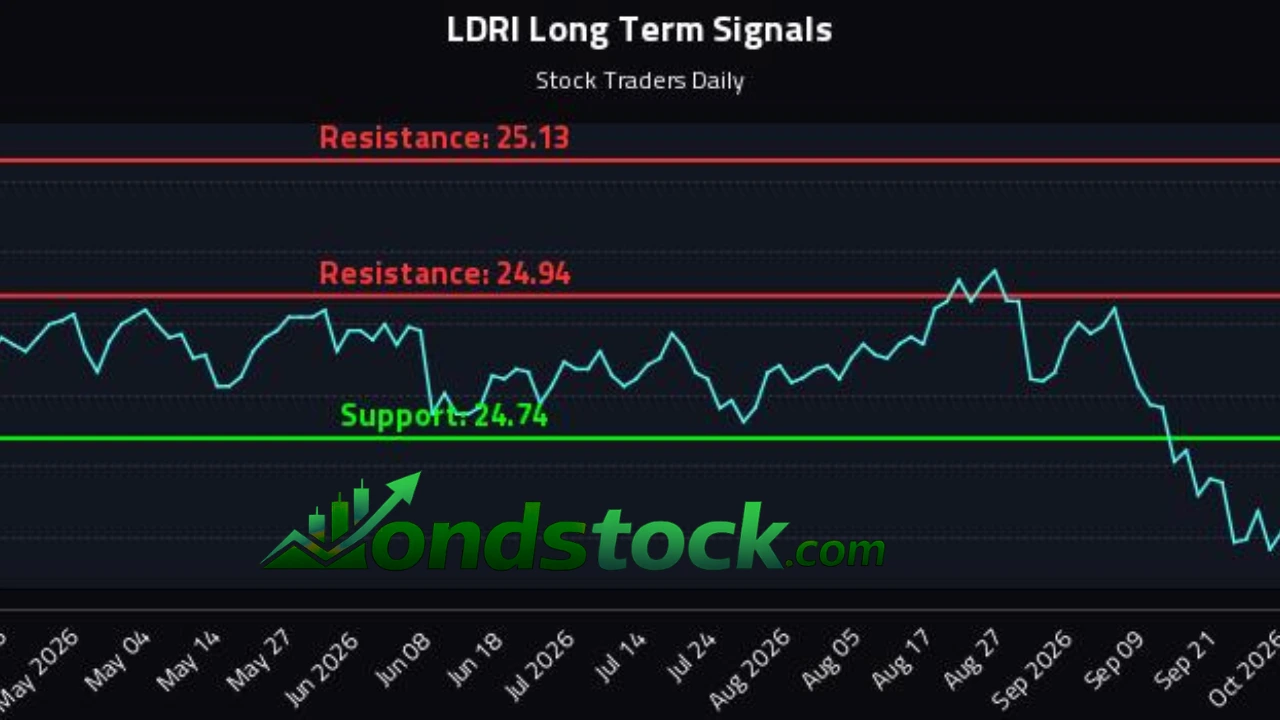
LDRI trades on NYSE Arca and is managed by iShares, the ETF platform of BlackRock. According to the market information provided for October 23, 2026, the fund closed at $24.88, with a reported 52-week range of $24.63 to $25.77. However, price alone does not reveal whether an inflation-protected investment is suitable for your financial goals.
This guide explores the fund’s investment strategy, price history, yield, expenses, risks, and outlook. It also explains how Treasury Inflation-Protected Securities work and what investors should review before making an investment decision.
What Is the iShares iBonds 1-5 Year TIPS Ladder ETF?
The iShares iBonds 1-5 Year TIPS Ladder ETF is a fixed-income ETF designed to provide exposure to short-term Treasury Inflation-Protected Securities, commonly called TIPS. These government securities adjust their principal according to changes in the Consumer Price Index. This structure helps investors address inflation risk while maintaining exposure to U.S. Treasury debt. Unlike a conventional bond fund, the ETF uses underlying iShares iBonds TIPS ETFs to build a maturity ladder.
The fund seeks to track an index composed of iShares iBonds TIPS ETFs with maturities of less than six years. This approach spreads exposure across different maturity periods rather than concentrating everything in a single bond maturity. Investors can purchase shares through a brokerage account instead of buying and managing individual Treasury securities. However, the ETF’s share price can fluctuate, and its market value is not guaranteed to remain at the purchase price.
Key Fund Details
The following table summarizes the available information about the fund.
| Fund detail | Information |
|---|---|
| Fund name | iShares iBonds 1-5 Year TIPS Ladder ETF |
| Ticker symbol | LDRI |
| Exchange | NYSE Arca |
| Issuer | BlackRock’s iShares |
| Asset class | Fixed income |
| Investment focus | Short-term inflation-protected U.S. Treasury securities |
| Inception date | November 7, 2024 |
| Expense ratio | 0.10%, as reported in the supplied data |
| Closing price | $24.88 on October 23, 2026 |
| Reported 52-week high | $25.77 |
| Reported 52-week low | $24.63 |
Fund details and market prices can change. Investors should verify current figures through the official iShares website or another reliable financial data provider before trading.

How the LDRI ETF Works
The fund uses a fund-of-funds structure, meaning it invests in other ETFs rather than relying exclusively on direct holdings of individual securities. Its underlying funds provide exposure to TIPS with different maturity dates. Combining those funds creates a ladder that distributes exposure across several points along the short-term maturity spectrum. This arrangement can simplify access to inflation-linked bonds for investors who prefer a single investment.
TIPS work differently from conventional Treasury securities because their principal adjusts with changes in the Consumer Price Index. When inflation increases, the principal generally rises; when deflation occurs, the principal can decline. Interest payments are calculated using the adjusted principal, so payments may change over time. Although Treasury securities have government backing, an ETF holding them can still experience price fluctuations and does not guarantee a fixed return for shareholders.
LDRI Price, Performance and 2026 Outlook
The supplied market data lists a closing price of $24.88 on October 23, 2026. Its reported 52-week high was $25.77, while the low was $24.63. These figures provide a basic snapshot of recent trading activity, but they do not explain the fund’s total return. Investors should also consider distributions, changes in net asset value, and the effects of inflation adjustments when evaluating performance.
The fund’s future performance will depend on several factors, including inflation trends, Treasury yields, real interest rates, and demand for short-term government debt. If inflation remains persistent, TIPS may become more attractive to investors seeking purchasing-power protection. However, if real yields rise, inflation-protected securities can experience price declines. Lower inflation does not automatically mean negative returns, but it can change the relative appeal of TIPS compared with conventional bonds.
Investors researching the 2026 outlook should compare total returns over several periods rather than relying on a single trading session. Useful measures include year-to-date performance, one-year returns, distribution history, and changes in the fund’s net asset value. These figures should be checked against current official data because the market snapshot above does not provide a complete performance history.
LDRI Yield, Distributions and Income Potential
The income potential of an inflation-protected bond ETF depends on the yields of its underlying securities, changes in adjusted principal, expenses, and the timing of distributions. The supplied AI-generated market summary reports a 30-day SEC yield of 5.08% as of October 2026. Because financial summaries can contain outdated or inaccurate figures, investors should confirm this yield directly with iShares and check the date and calculation method before using it to estimate income.
A quoted SEC yield is not the same as a guaranteed annual return or a promise that distributions will remain constant. Distribution amounts can change as underlying securities generate income and the fund’s portfolio evolves. Inflation adjustments can also affect the economics of TIPS investments. Investors should therefore examine the latest distribution history alongside the SEC yield rather than assuming the quoted figure represents a fixed monthly payment.
When evaluating the fund’s income potential, review these details:
- The latest 30-day SEC yield and its reporting date.
- Recent distribution amounts and payment frequency.
- The expense ratio and its effect on net returns.
- Changes in inflation expectations and real Treasury yields.
- Total return, including both price movements and distributions.
The most useful income comparison considers the return investors actually receive after expenses, together with the level of risk required to earn it.
LDRI Holdings, Portfolio Structure and Expense Ratio
The fund’s portfolio structure is central to understanding its investment approach. By holding underlying iShares TIPS ETFs, it provides exposure to a range of short-term inflation-protected Treasury securities. This maturity ladder can reduce the need for investors to select individual bonds and monitor separate maturity dates. However, the actual allocation, underlying ETF weights, and effective maturity profile can change, so investors should consult the latest published holdings.
The reported expense ratio is 0.10%, according to the supplied fund information. This means an investor pays approximately $10 annually for every $10,000 invested, assuming the rate remains unchanged and the investment value averages $10,000 throughout the year. The fee is generally reflected in fund performance rather than charged as a separate bill. Investors should also understand that brokerage commissions, bid-ask spreads, and applicable taxes may affect their overall costs.
Before investing, review the following portfolio details:
- Underlying funds and their current allocations.
- Weighted average maturity and effective duration.
- Current SEC yield and distribution history.
- Expense ratio and other potential trading costs.
- Net asset value compared with the exchange-traded share price.
These figures help investors understand the fund’s interest-rate sensitivity, income characteristics, and overall investment structure.

LDRI Risks and Important Considerations
Inflation protection does not eliminate investment risk. Although TIPS adjust their principal with inflation, their market prices can decline when real interest rates rise. Investors who sell shares during an unfavorable market period may receive less than their original investment. The fund’s short-term maturity focus can reduce interest-rate sensitivity compared with longer-duration bond portfolios, but it cannot prevent losses under all market conditions.
Another consideration is the relationship between actual inflation and market expectations. If investors have already priced high inflation into Treasury securities, inflation that matches expectations may not produce the performance they anticipate. Deflation can also reduce adjusted principal, while changes in interest rates and market demand may affect the ETF’s share price. In addition, an ETF’s market price may temporarily trade above or below its net asset value.
Investors should consider several risks before buying shares:
- Interest-rate risk, especially when real yields increase.
- Inflation risk if purchasing costs rise faster than expected.
- Market-price risk when shares trade above or below net asset value.
- Distribution variability that makes income less predictable.
- Tax considerations associated with inflation adjustments and distributions.
TIPS are backed by the U.S. government, but that backing does not guarantee an ETF’s market price or total return. Your investment horizon, income needs, and tolerance for temporary losses should guide your decision.
LDRI vs. Other Inflation-Protected Bond ETFs
Investors may compare this fund with other short-term TIPS ETFs, including the Vanguard Short-Term Inflation-Protected Securities ETF (VTIP). Both approaches provide exposure to inflation-protected U.S. Treasury securities, but their portfolio construction, expenses, maturity profiles, and distribution patterns can differ. A meaningful comparison should use current fund documents rather than relying on ticker symbols or headline yields alone.
A ladder-based fund and a more conventional short-term TIPS ETF may appeal to similar investors, yet their underlying holdings and index methodologies are not necessarily identical. Compare their expense ratios, effective durations, average maturities, assets under management, bid-ask spreads, and historical total returns. Also check whether each fund distributes income on a monthly or different schedule, and whether its current yield reflects comparable measurement dates.
| Comparison factor | What to evaluate |
|---|---|
| Investment strategy | Ladder-based exposure versus a broader short-term TIPS portfolio |
| Expense ratio | Annual fund operating costs |
| SEC yield | Standardized recent income measure |
| Effective duration | Sensitivity to interest-rate changes |
| Holdings | Underlying securities, maturity dates, and concentration |
| Trading costs | Bid-ask spreads and brokerage charges |
| Total return | Share-price changes plus distributions |
The best choice depends on your objectives. An investor prioritizing simple inflation-linked exposure may value one fund’s structure, while another may prefer a competing ETF with lower costs, greater trading liquidity, or a more suitable maturity profile. Compare verified, up-to-date figures before deciding.
Is the LDRI ETF Worth Considering in 2026?
This fund may be worth researching if you want short-term inflation-protected Treasury exposure without managing individual securities. Its ladder structure offers a convenient way to access several maturity segments through one exchange-traded investment. It may complement a broader portfolio containing conventional bonds, equities, and cash, depending on your financial objectives and risk tolerance.
However, the fund is not automatically suitable for every investor. Those seeking guaranteed cash values, predictable distributions, or protection against every type of market loss should understand its limitations. Before purchasing shares, check the latest holdings, yield, expense ratio, and performance data. Consider how the fund fits your time horizon, liquidity needs, tax situation, and overall asset allocation.
A careful decision should weigh both potential benefits and risks rather than focusing only on the current share price or advertised yield. If you are unsure how inflation-protected securities fit your circumstances, consider consulting a qualified financial adviser.

Conclusion
The iShares iBonds 1-5 Year TIPS Ladder ETF provides a structured way to access short-term Treasury Inflation-Protected Securities. Its ladder-based approach, relatively low reported expense ratio, and focus on inflation-linked bonds may appeal to investors seeking diversification and purchasing-power protection. Nevertheless, changing real interest rates, variable distributions, and market-price movements can affect results.
The reported October 23, 2026, closing price of $24.88 is a useful historical reference, not a prediction of future performance. Verify current market data and official fund documents before investing. Ultimately, the right decision depends on your portfolio, investment horizon, and understanding of inflation-linked bond risks.
Frequently Asked Questions
What is LDRI?
LDRI is the ticker symbol for the iShares iBonds 1-5 Year TIPS Ladder ETF, which provides exposure to short-term inflation-protected U.S. Treasury securities.
What was the LDRI share price on October 23, 2026?
The supplied market data reports a closing price of $24.88 on October 23, 2026.
What is the expense ratio of this ETF?
The supplied information lists an expense ratio of 0.10%, equivalent to approximately $10 annually per $10,000 invested at a constant average balance.
Does this ETF protect investors against inflation?
Its underlying TIPS adjust principal with inflation, but the ETF’s market price and total return can still decline.
What is the reported SEC yield?
The supplied AI-generated summary reports a 30-day SEC yield of 5.08% as of October 2026, which should be verified against official fund data.
Does this ETF pay dividends?
It can make income distributions from its underlying investments, but payment amounts and schedules should be confirmed through the latest official distribution information.
How does this fund compare with VTIP?
Both provide exposure to short-term inflation-protected Treasury securities, but their portfolio structures, fees, yields, and maturity profiles may differ.
Is this ETF a safe investment for 2026?
It invests through U.S. Treasury inflation-protected securities, but investors still face interest-rate, market-price, and distribution risks, so returns are not guaranteed.
Also Read…