
MUU stock has attracted attention from traders looking for leveraged exposure to Micron Technology, a company operating in the fast-moving semiconductor industry. As artificial intelligence, data centers, and advanced memory chips influence market sentiment, investors are increasingly interested in exchange-traded funds that can amplify daily price movements. However, higher potential returns come with greater risks, making it important to understand how this fund works before trading.
The Direxion Daily MU Bull 2X ETF trades on the NASDAQ under the ticker MUU. It aims to deliver twice Micron Technology’s daily performance before fees and expenses. This structure can create significant opportunities during favorable trading sessions, but losses can also grow quickly when Micron shares decline. In this guide, you will learn about the MUU stock price, fund structure, recent performance, potential catalysts, distributions, and the risks investors should consider.
What Is MUU Stock?
MUU is the ticker symbol for the Direxion Daily MU Bull 2X ETF, a leveraged exchange-traded fund designed to provide approximately 200% of Micron Technology’s daily share-price performance before fees and expenses. Unlike ordinary company shares, this fund uses financial instruments to pursue its daily investment objective. Its results depend heavily on Micron’s movements, making it different from a traditional semiconductor investment.
Micron Technology, traded under the ticker MU, manufactures memory and storage products used in computers, smartphones, data centers, and artificial intelligence infrastructure. When Micron’s share price rises during a trading session, MUU generally seeks to rise by approximately twice that percentage. If Micron falls, MUU generally experiences an amplified decline. Actual results can differ because of expenses, financing costs, tracking differences, and market conditions. nasdaq.com
MUU Stock Price Today and Recent Performance
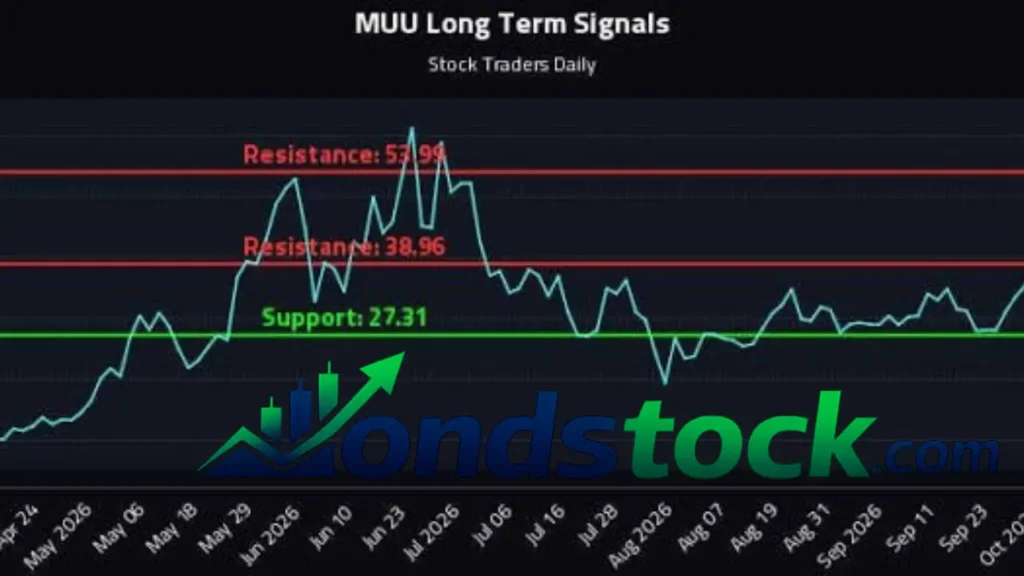
According to the market information supplied for October 13, 2026, MUU was quoted at approximately $28.22 to $28.23, down around $2.89 to $2.90 from its previous close of $31.12. The supplied data showed an intraday range of $27.37 to $28.83. These figures represent the provided market snapshot, not a guaranteed live quote, and prices may change throughout the trading session.
The same snapshot listed a 52-week high of $62.64 and a low of $2.52. This wide range illustrates how dramatically a leveraged semiconductor ETF can move as market conditions change. Investors researching MUU should check an up-to-date quote before making a trading decision and distinguish intraday price changes from longer-term total returns.
| Market detail | Reported information |
|---|---|
| ETF name | Direxion Daily MU Bull 2X ETF |
| Ticker symbol | MUU |
| Exchange | NASDAQ |
| Reported price | Approximately $28.22–$28.23 |
| Previous close | $31.12 |
| Intraday range | $27.37–$28.83 |
| 52-week range | $2.52–$62.64 |
| Reported expense ratio | 1.01% |
For a more complete picture, review the MUU stock chart alongside Micron’s share-price chart. Compare daily percentage changes, trading volume, and major company announcements. A single day’s decline does not necessarily establish a long-term trend, while a strong historical return does not guarantee future gains.
How Does the MUU ETF Work?
MUU uses leverage to target twice Micron’s daily performance. For example, if Micron rises by 3% during a trading day, MUU aims to gain approximately 6% before fees and expenses. If Micron falls by 3%, MUU aims to lose approximately 6%. These examples are simplified illustrations of the fund’s daily objective, not predictions of actual trading results.
The most important detail is that the target applies to a single day, not to Micron’s cumulative return over several weeks or months. Because the fund resets its exposure daily, compounding and volatility can cause its longer-term performance to differ substantially from twice Micron’s return over the same period. Investors should read the fund’s official prospectus to understand its objective, costs, and risks.
MUU Stock Analysis: What Drives Its Price?
Micron’s financial performance is one of the most important factors influencing MUU. Demand for high-bandwidth memory, conventional DRAM, and NAND storage can affect Micron’s revenue expectations and market valuation. When investors expect stronger demand from artificial intelligence systems and data centers, semiconductor shares may benefit. If demand weakens or expectations fall short, Micron can experience downward pressure that may be magnified in MUU.
Several additional factors can influence short-term movements:
- Micron’s quarterly earnings and management guidance.
- Memory-chip pricing, supply, and demand.
- Artificial intelligence and data-center investment trends.
- Interest rates and broader stock-market sentiment.
- Semiconductor industry competition and production capacity.
- Unexpected economic news and changes in investor expectations.
These factors do not affect MUU in isolation. Its daily leverage can amplify the impact of movements in Micron shares, including movements caused by earnings surprises or sudden changes in market sentiment. Before interpreting a price increase as evidence of improving fundamentals, examine the underlying company’s news and the broader semiconductor market.
MUU Stock Forecast and Outlook for 2026
The outlook for MUU depends partly on Micron’s business prospects and partly on the path its share price takes each day. Strong memory demand, improving earnings expectations, and favorable semiconductor sentiment could support Micron. Because MUU targets twice the daily movement, positive sessions may produce larger gains. However, that relationship is a daily objective rather than a promise of sustained outperformance.
A bearish scenario could develop if memory prices weaken, customer demand slows, company guidance disappoints, or the broader market turns risk-averse. Under these conditions, Micron could decline, potentially causing MUU to lose value more rapidly. Repeated fluctuations may also erode returns through compounding, even when the underlying stock finishes a longer period near its starting price.
Rather than relying on a single price prediction, evaluate different scenarios. Consider how MUU might respond to a strong earnings report, a disappointing forecast, or several consecutive volatile sessions. Any numerical forecast should identify its assumptions, time horizon, and data source. No forecast can reliably eliminate the uncertainty associated with a leveraged ETF.
Has MUU Stock Split?
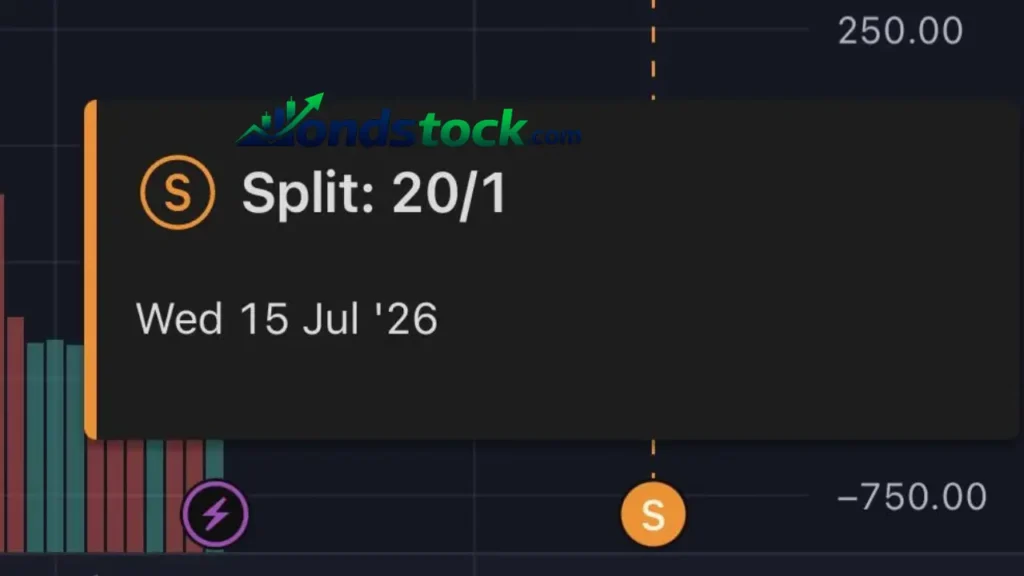
Investors searching for an MUU stock split should distinguish confirmed fund actions from online speculation. An ordinary stock split changes the number of shares and the price per share proportionally, while a reverse split reduces the number of shares and raises the price per share proportionally. Neither action automatically creates an equivalent increase or decrease in an investor’s total position value.
Before relying on a reported split date, check Direxion’s official announcements and the fund’s notices. A historical price adjustment on a chart does not, by itself, confirm that a split occurred. Verify the effective date, split ratio, and any changes to the ticker or share count through an authoritative source.
Does MUU Stock Pay a Dividend?
The supplied market snapshot did not list a current dividend or quarterly distribution amount. That information alone is insufficient to establish whether the fund has made distributions in the past or whether a future payment will occur. Investors should check the latest issuer information and distribution history rather than assuming that MUU pays a regular dividend.
An ETF distribution is also different from a dividend paid directly by Micron to its shareholders. A leveraged fund’s distributions depend on its own operations and applicable distribution policies. If income is important to your investment strategy, examine the fund’s distribution history, relevant dates, and tax considerations before buying.

MUU Stock News and Market Updates
Following relevant news can help investors understand why MUU is moving. Since the fund seeks leveraged daily exposure to Micron, company earnings, memory-market updates, and semiconductor industry developments deserve particular attention. Broader events, including changes in interest-rate expectations and shifts in technology-sector sentiment, may also affect Micron’s share price.
For reliable updates, consult the fund issuer, Micron’s investor-relations website, NASDAQ market information, and established financial-data providers. Confirm the publication date and distinguish reported facts from analyst opinions. A headline about artificial intelligence demand, for example, does not necessarily mean Micron’s stock will rise immediately or that MUU will deliver positive returns.
Key Risks of Investing in MUU Stock
Leverage is the central risk. Because MUU targets twice Micron’s daily performance, a relatively modest decline in the underlying stock can produce a much larger percentage loss in the ETF. The same mechanism that magnifies gains can magnify losses, and a sharp adverse move may substantially reduce the value of an investment.
Daily compounding creates another important risk. Imagine that Micron gains 10% on one day and then loses approximately 9.09% on the next. Micron would return close to its original level over those two sessions, before considering other factors. A hypothetical fund delivering exactly twice each daily move would gain 20% and then lose approximately 18.18%, leaving it down overall. This illustrates why twice the daily return does not mean twice the longer-term return.
Other risks include market volatility, tracking differences, trading liquidity, financing expenses, and the possibility of sudden price gaps. MUU may therefore be unsuitable for investors who cannot tolerate significant short-term losses or who expect a leveraged fund to behave like an ordinary long-term holding. Understand the risks before deciding whether it fits your financial circumstances.
How to Research and Buy MUU Shares
If you are considering MUU, begin by confirming the ticker and fund name through your brokerage or an authoritative market-data source. Review the current price, bid-ask spread, trading volume, expense ratio, and official prospectus. These details can help you understand the costs and mechanics of the fund before placing an order.
You should also define your trading objective, acceptable loss, and intended holding period. Because MUU resets its leverage daily, it requires more frequent monitoring than a conventional unleveraged investment. Consider using appropriate position sizing and a predetermined risk-management plan instead of relying on recent gains or headlines. If you are uncertain about the fund’s mechanics, seek guidance from a qualified financial professional.
Conclusion: Is MUU Stock Worth Researching in 2026?
MUU offers a way to obtain leveraged daily exposure to Micron Technology without buying Micron shares directly. Its structure may appeal to experienced traders who understand daily leverage and can actively manage risk. However, its amplified losses, compounding effects, and sensitivity to semiconductor market conditions make it very different from a traditional stock investment.
Before trading, verify the latest price, review the fund’s official documents, and compare its daily performance with Micron’s movements. Historical gains, recent price declines, and analyst expectations should all be considered in context. Ultimately, whether MUU belongs in your strategy depends on your objectives, time horizon, and ability to tolerate substantial volatility.
Frequently Asked Questions
What is MUU stock?
MUU is the ticker for the Direxion Daily MU Bull 2X ETF, which targets twice Micron Technology’s daily share-price performance before fees and expenses.
What is the MUU stock price today?
The supplied October 13, 2026, snapshot reported approximately $28.22–$28.23, but you should check a live market quote for the latest price.
Is MUU a 2x leveraged ETF?
Yes, MUU seeks 200% of Micron’s daily performance before fees and expenses, although actual results may differ.
What affects the MUU stock price?
Micron’s share-price movements, semiconductor demand, earnings announcements, market sentiment, and daily leverage can all influence MUU.
Has MUU stock split?
Check Direxion’s official announcements and fund notices for verified split history rather than relying on unconfirmed reports.
Does MUU stock pay a dividend?
The supplied snapshot did not show a current dividend amount; consult the issuer’s latest distribution information to verify payment details.
Is MUU suitable for long-term investing?
MUU is designed around daily leveraged performance, and compounding can produce unexpected longer-term results, so it requires careful risk assessment.
Where can I find the latest MUU stock news?
Check Direxion’s official fund page, Micron’s investor-relations website, NASDAQ, and reputable financial-data providers for current information.
Also Read…