
JEPQ Stock Dividend History
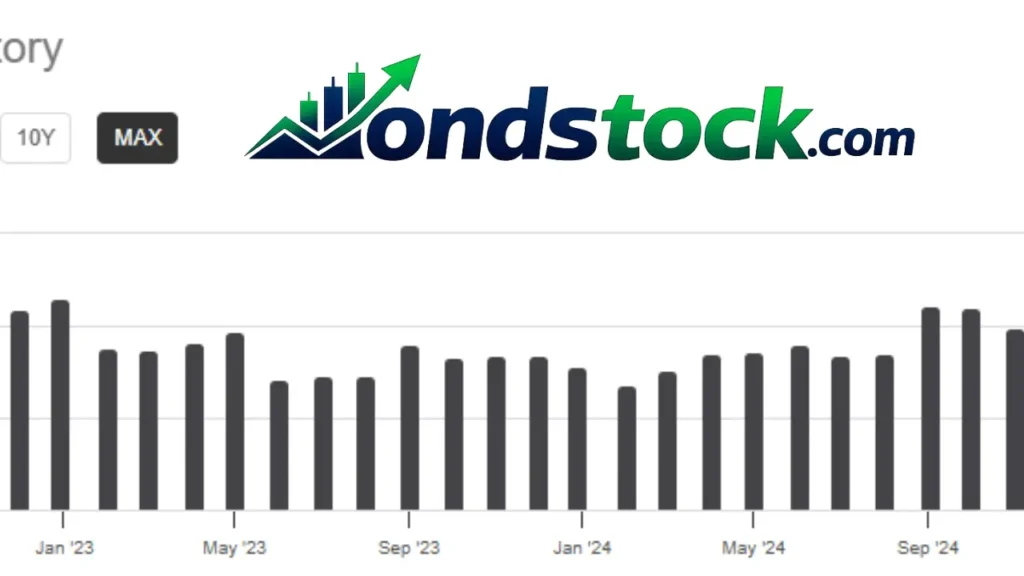
The relationship between JEPQ’s share price and monthly distributions is important when evaluating its overall performance. An investor may receive regular cash payments while the value of the ETF declines. Alternatively, the fund may benefit from rising equity prices while continuing to distribute income. Looking at distributions alone therefore provides only part of the investment picture.
A JEPQ stock chart can help investors examine price movements over different periods. Comparing the chart with historical distributions provides a clearer view of how the fund has performed through changing market conditions. Investors should also compare total returns, which account for price changes and reinvested distributions, when evaluating JEPQ against other investment options.
What Factors Affect JEPQ Dividend Payments?
Several factors can influence the amount JEPQ distributes each month. Market volatility is particularly important because it can affect the premiums available from the fund’s options strategy. Changes in underlying stock prices, portfolio income, and broader financial conditions may also influence distributions. Consequently, monthly payments can vary even when the fund continues following its stated investment approach. wallstreethorizon.com
Investors should understand these important considerations:
- Market volatility can influence the premiums available through the options strategy.
- Equity market performance can affect the value of the fund’s underlying investments.
- Distribution amounts may change as the fund’s income and market conditions evolve.
- Expenses and other fund-level factors can affect investment results.
- Past distributions cannot guarantee future payments or investment profits.
Understanding these factors helps investors avoid assuming that a recent high payment will continue indefinitely. Reviewing several months of data and reading official fund disclosures provides a more balanced perspective than focusing on a single distribution.
JEPQ Stock Holdings and Investment Strategy
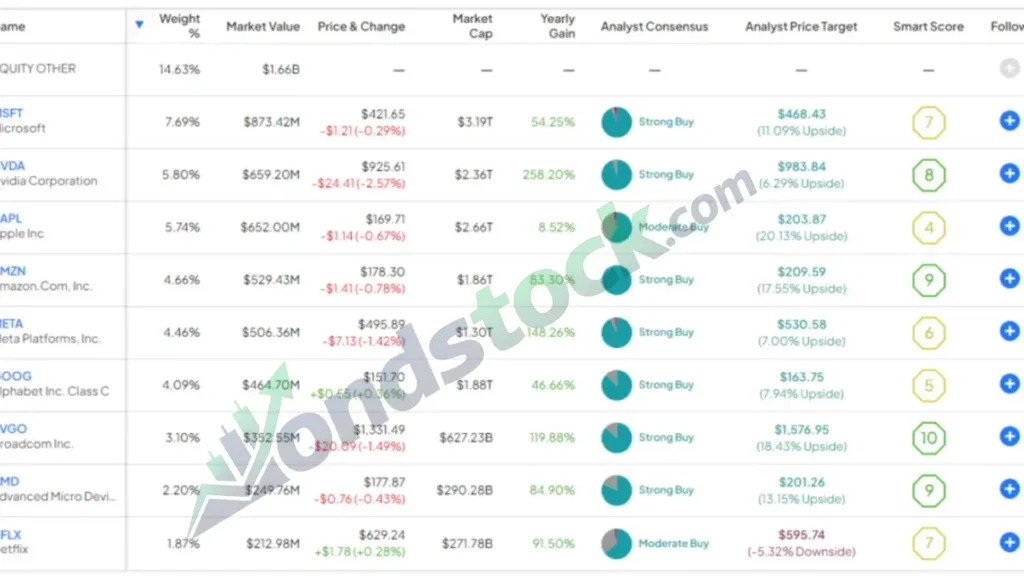
JEPQ provides exposure to large-cap growth companies associated with the Nasdaq-100 while using an options-based strategy designed to generate income. This approach differs from simply holding a conventional Nasdaq-100 index fund. The strategy seeks to balance income generation with equity market participation, although it also introduces trade-offs that investors should understand before investing.
The fund’s holdings can change over time, so investors should consult its latest portfolio disclosures rather than rely on an outdated holdings list. Its options strategy may also limit some participation in strong market advances, depending on how the positions perform. These characteristics can make JEPQ useful for certain income-focused investors, but they may not suit investors seeking maximum long-term capital appreciation.
JEPQ Stock vs. QQQ: Which Is Better for Investors?
JEPQ and Invesco QQQ both provide exposure to major Nasdaq-related companies, but their investment approaches differ. JEPQ emphasizes income generation through its actively managed, options-based strategy. QQQ generally seeks to track the Nasdaq-100 Index, making it more directly focused on the performance of its underlying index rather than generating income through the same strategy.
The better choice depends on an investor’s objectives. Someone seeking regular distributions may prefer to investigate JEPQ, while someone prioritizing growth and broad participation in Nasdaq-100 performance may favor QQQ. Neither fund guarantees profits, and both can experience losses. Comparing expenses, holdings, risk, and total returns can help investors make a more informed decision.
JEPQ Stock Dividend History: What Could Affect Future Dividends?
Future JEPQ distributions depend on several variables, including market volatility, option premiums, portfolio performance, and the fund’s investment decisions. Historical payments can help establish context, but they cannot reliably predict the next distribution. Even when the ETF’s share price remains relatively stable, monthly income may change as market conditions and the options strategy evolve.
Investors researching a forecast should distinguish distribution estimates from share-price predictions. A fund might continue paying monthly distributions while its market value declines. Similarly, a strong share-price performance does not guarantee a higher distribution. Reviewing official announcements, current holdings, and longer-term total returns provides a more useful foundation than relying on a single projected yield.
JEPQ Stock Forecast 2026 and Price Prediction for 2030
Forecasting JEPQ through the end of 2026 or toward 2030 involves considerable uncertainty. Interest rates, technology-sector valuations, economic growth, and market volatility can all affect its underlying investments and income strategy. Because the fund’s distributions fluctuate, projecting future income using one recent payment may produce misleading estimates.
Long-term investors should evaluate several possible market scenarios instead of treating one price target as certain. They should also consider whether monthly income or long-term growth is the main objective. A realistic analysis accounts for potential price declines, variable distributions, expenses, and reinvestment. Any 2030 prediction should be viewed as a scenario rather than a dependable estimate of future performance.
Is JEPQ Stock a Buy or Sell for Dividend Investors?
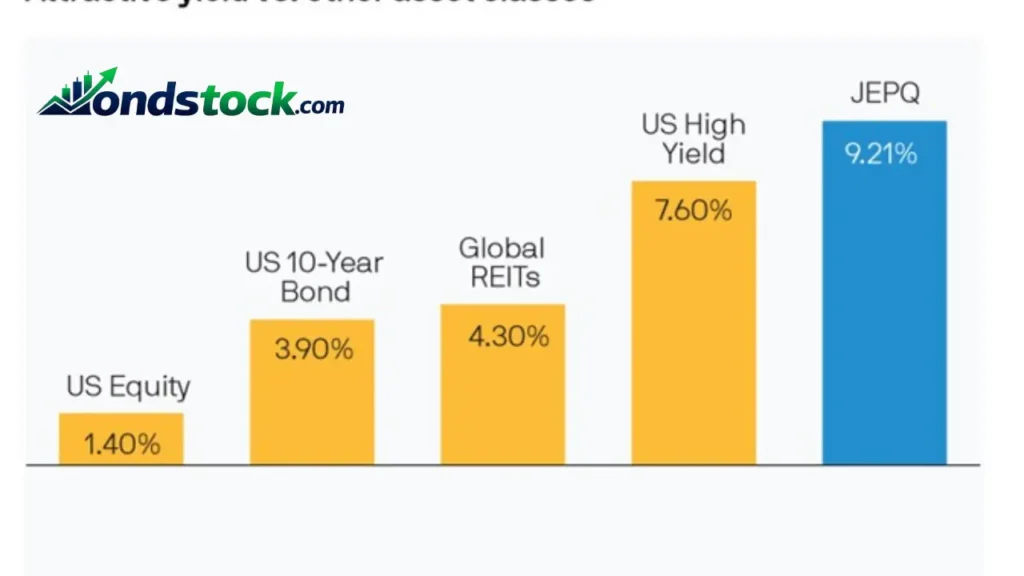
JEPQ may appeal to investors who value monthly distributions and want exposure to large-cap growth companies. Its income-focused strategy offers a different approach from traditional index investing. However, the fund still carries equity market risk, and its distributions can fluctuate. A high yield should not be interpreted as proof that an investment is safe or suitable for every portfolio.
Before buying, holding, or selling, investors should consider their income needs, investment timeline, risk tolerance, and existing holdings. They should also assess whether they can withstand declines in the ETF’s market value. Diversification matters because relying heavily on one income-focused fund can expose a portfolio to concentrated risks. Individual circumstances and current fund information should guide any investment decision.
How to Research JEPQ Stock News and Dividend Updates
Following reliable sources helps investors keep up with distribution announcements, price changes, and developments affecting JEPQ. JPMorgan Asset Management’s official fund page is a useful starting point for current holdings, fund documents, and distribution information. Financial data websites can provide additional historical tables and charts, but their figures should be checked against official records when accuracy matters.
When researching why the fund’s price is moving, consider broader Nasdaq performance, changes in market volatility, and economic news. A daily price decline does not necessarily mean a distribution has been reduced, just as a higher price does not guarantee stronger future income. Separating market movements from declared distributions makes it easier to interpret new information without drawing premature conclusions.
Conclusion: What JEPQ Stock Dividend History Tells Investors
JEPQ offers monthly distributions through an income-focused strategy that combines equity exposure with options. Its historical payments can help investors understand previous income patterns, review important dates, and compare distributions across different market conditions. However, the amount received each month can change, and historical payments do not guarantee future income.
Investors should assess yield alongside share-price performance, total returns, expenses, and investment risks. They should also confirm upcoming ex-dividend dates and declared distributions through official sources. By considering both income potential and the possibility of losses, investors can make better-informed decisions about whether JEPQ fits their broader financial objectives.
Frequently Asked Questions
Does JEPQ pay dividends every month?
Yes, JEPQ generally makes monthly distributions, although the amount can vary and future payments are not guaranteed.
What is the latest JEPQ dividend payment in the provided 2026 data?
The supplied data lists a distribution of $0.5669 per share, with an October 1 ex-dividend date and an October 5 payment date.
What is the JEPQ stock ex-dividend date for the next payment?
The supplied information identifies November 3, 2026, as an expected date, which investors should verify through JPMorgan’s official fund page.
How much does JEPQ pay per share each month?
The amount changes from month to month, so investors should check the latest declared distribution rather than assume a fixed payment.
What is the JEPQ stock dividend yield?
The supplied market information reports approximately 11.30%, but the yield changes with distributions, share price, and the calculation method used.
Why does the JEPQ monthly dividend change?
Distributions can fluctuate because of market volatility, option premiums, portfolio income, and other factors affecting the fund’s strategy.
Is JEPQ a good investment for monthly income?
JEPQ may suit some income-focused investors, but its variable distributions, market risk, and potential share-price declines must be considered.
Where can I find the complete JEPQ dividend history?
Check JPMorgan Asset Management’s official fund page and compare its distribution records with established financial data providers for historical payments and dates.
Also Read…