
NYSEARCA: ULTY is the ticker for the YieldMax Ultra Option Income Strategy ETF, an actively managed fund focused on generating current income through an option-based strategy. As of October 8, 2026, the ETF was trading around $25.49, with an intraday high of $25.64 and a low of $25.44. Its 52-week range shown in the supplied market data was $24.90 to $55.65.
For investors searching for income-focused ETFs, ULTY stands out because its strategy is built around option income rather than simply holding traditional dividend-paying companies. The fund began trading in February 2024 and has a gross expense ratio of 1.40%. Its primary exchange is NYSE Arca, making the ticker particularly relevant for investors researching its price, distributions, strategy, and longer-term prospects.
What Is NYSEARCA: ULTY?
NYSEARCA: ULTY represents the YieldMax Ultra Option Income Strategy ETF. According to the fund information supplied, ULTY is actively managed and designed to generate current income through a diversified portfolio of call-related option strategies. This approach makes it different from a conventional dividend ETF, where investors generally receive distributions generated by dividends from companies held in the portfolio.
The fund’s emphasis on current income can make it interesting to investors looking for frequent cash distributions. However, income-focused ETFs should be evaluated beyond their headline payout figures. Share-price movement, portfolio exposure, option strategy, expenses, and the sustainability of distributions all matter when determining whether a fund fits an investor’s broader objectives.
NYSEARCA: ULTY Price and Key Market Data
The supplied October 8, 2026 market snapshot shows ULTY at $25.49. The ETF opened at $25.47, reached an intraday high of $25.64, and touched an intraday low of $25.44. The same data shows a 52-week high of $55.65 and a 52-week low of $24.90, illustrating how dramatically the fund’s market price can vary over a broader period.
| ULTY Metric | October 8, 2026 Data |
|---|---|
| ETF | YieldMax Ultra Option Income Strategy ETF |
| Ticker | ULTY |
| Exchange | NYSE Arca |
| Price | $25.49 |
| Open | $25.47 |
| Day High | $25.64 |
| Day Low | $25.44 |
| 52-Week High | $55.65 |
| 52-Week Low | $24.90 |
| Fund Inception | February 28, 2024 |
| Gross Expense Ratio | 1.40% |
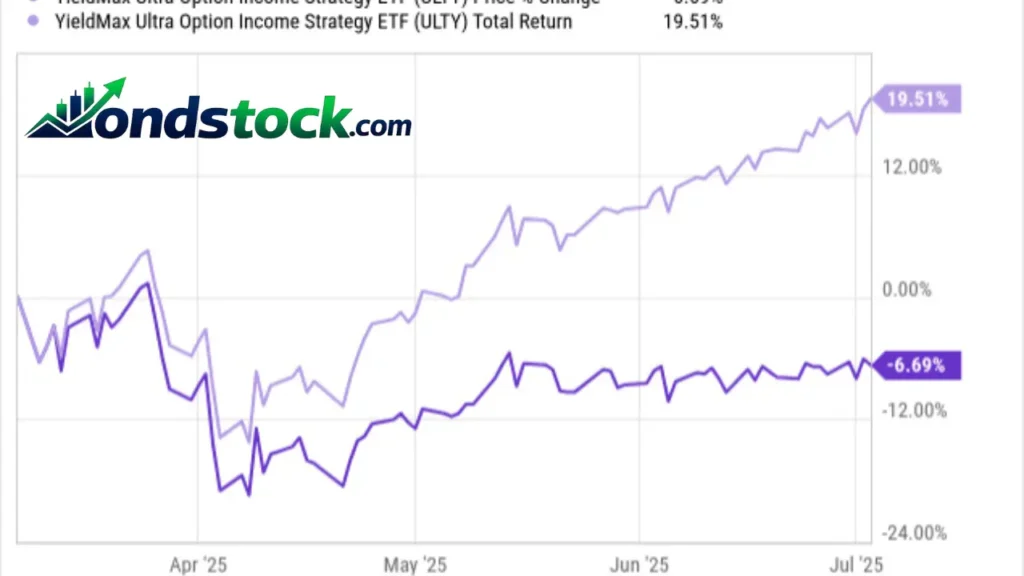
The wide gap between the 52-week high and low is important for anyone assessing ULTY. A high distribution rate may attract attention, but investors also need to consider whether the underlying strategy and market price can support their desired total return. Looking only at cash distributions without considering changes in the ETF’s value can give an incomplete picture of investment performance.
ULTY Dividend Yield and Distribution Strategy
One of the main reasons investors research ULTY is its income potential. The fund is designed around an option-income strategy, meaning its distributions should be understood differently from ordinary dividends paid by operating companies. The amount and nature of distributions can change, so investors should review the latest official distribution information instead of assuming that a previous payout will continue indefinitely.
The supplied search results also show that ULTY’s distribution schedule receives significant investor attention. Market Chameleon data indicated an October 7, 2026 ex-dividend date with a projected distribution of approximately $0.2943. Because projected distributions can change, this figure should be treated as a market-data reference rather than a guaranteed future payment.
How Does the ULTY Investment Strategy Work?
The YieldMax fund description identifies ULTY as an actively managed ETF designed to generate current income through a diversified portfolio of call option strategies. Instead of relying exclusively on traditional stock dividends, the fund seeks income from the option market. This structure can create a very different income profile from conventional equity ETFs.
The strategy also introduces additional considerations. Options can generate income, but their value and potential profitability are affected by factors such as volatility, underlying asset prices, market direction, and time. Investors therefore need to understand that a high-income strategy can involve meaningful risks even when the distribution headline appears attractive.
ULTY Holdings and Portfolio Exposure
Portfolio exposure is another important part of analyzing ULTY. Because the fund uses an actively managed option-income approach, its performance can be influenced by the securities and strategies selected by the portfolio managers. The underlying positions can change over time, which means investors should avoid treating a single holdings snapshot as a permanent description of the fund.
This is especially relevant when comparing ULTY with other income ETFs. A fund may advertise a high level of income while exposing investors to significant price movements. Reviewing holdings, option positions, NAV behavior, and distribution characteristics together gives a more useful picture than focusing on one metric. digital.fidelity.com
NYSEARCA: ULTY Compare With Other Income ETFs
For investors searching for a NYSEARCA: ULTY compare, the most useful approach is to evaluate the fund across several categories rather than simply searching for the ETF with the highest yield. Distribution frequency, total return, expense ratio, volatility, strategy, and underlying exposure can all influence the quality of an income investment.
| Comparison Factor | Why It Matters |
|---|---|
| Distribution rate | Shows the scale of recent income relative to price |
| Distribution frequency | Helps investors understand cash-flow timing |
| Expense ratio | Affects the portion of returns consumed by fund expenses |
| Total return | Combines income and price performance |
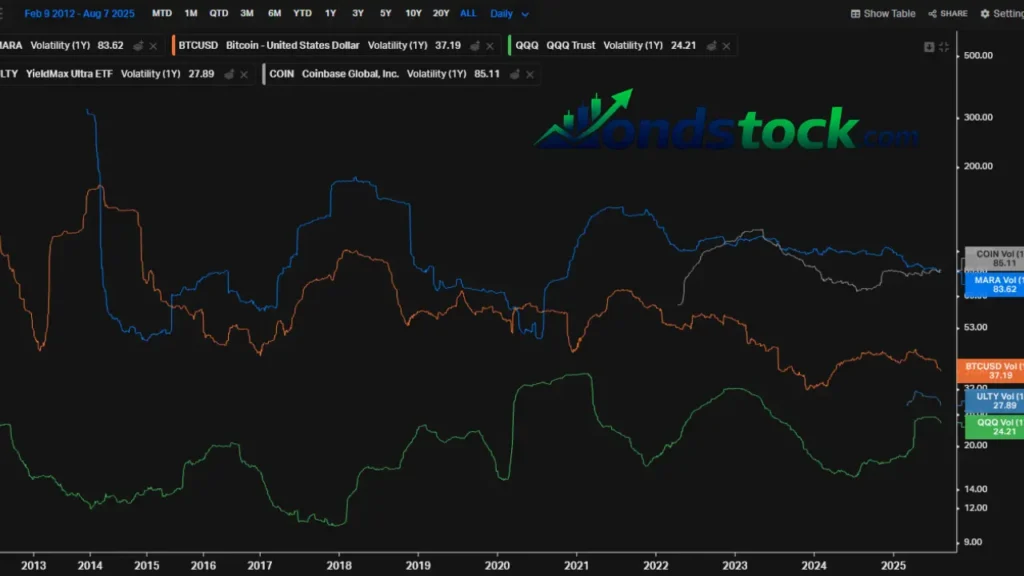
| Volatility | Indicates potential fluctuations in market value |
| Strategy | Shows how the fund attempts to generate income |
| Holdings | Reveals underlying market exposure |
| NAV performance | Helps assess the fund beyond its market price |
A comparison is particularly useful because a high distribution does not automatically mean superior performance. One ETF might provide more frequent income, while another may offer lower expenses or better capital preservation. The right choice depends on the investor’s objective, risk tolerance, and expected holding period.
Key Risks of Investing in ULTY
ULTY carries risks that investors should understand before focusing on its income potential. Option-based strategies can behave differently in rising, falling, or highly volatile markets. The ETF’s market price can also decline, potentially offsetting some or all of the cash distributions received by an investor.
Investors should also pay attention to distribution composition. A distribution is not necessarily equivalent to economic profit, and some distributions may have different tax or accounting characteristics. The fund’s 1.40% gross expense ratio is another factor worth considering because expenses reduce the assets available to generate investor returns.
Before investing, investors should consider:
- Historical total return rather than yield alone
- Changes in the ETF’s market price and NAV
- Distribution history and composition
- Option strategy and underlying exposure
- Fund expenses
- Personal income requirements
- Overall tolerance for volatility and loss
Is NYSEARCA: ULTY a Good Investment for 2026?
Whether ULTY is a good investment depends heavily on what an investor wants from an ETF. Someone prioritizing frequent income may find its option-income structure appealing. An investor focused primarily on long-term capital appreciation may place greater emphasis on price growth, total return, and downside protection.
The available market data also shows why investors should avoid evaluating ULTY solely by its distribution potential. Its reported 52-week range extends from $24.90 to $55.65, while the October 8 price was around $25.49. That substantial historical price movement demonstrates the importance of considering capital risk alongside income potential.
NYSEARCA: ULTY 2026 Outlook
The 2026 outlook for ULTY will depend on several factors, including market volatility, the performance of its underlying exposures, option-market conditions, and the effectiveness of its income strategy. Higher volatility can create opportunities for option strategies, but it can also increase the risk of substantial movements in the underlying securities.
Investors should therefore monitor ULTY through several indicators rather than attempting to predict its future from one distribution. Current price, NAV, distribution announcements, portfolio changes, and total return can collectively provide a clearer picture. The fund’s future distributions should not be assumed from any single historical payment or annualized figure.
ULTY vs. Traditional Dividend ETFs
Traditional dividend ETFs generally obtain income from dividends paid by companies in their portfolios. ULTY takes a different approach by using an actively managed option-income strategy. This difference can make its distribution profile more dynamic and can also introduce risks that are less prominent in conventional dividend-focused funds.
For an income investor, the distinction is important. Traditional dividend strategies may emphasize businesses with established dividend policies, while an option-income ETF can seek cash flow through derivatives. Neither structure is automatically better. The more appropriate choice depends on whether the investor values frequent income, capital growth, lower complexity, or a particular risk profile.
What Investors Should Check Before Buying ULTY
Before buying ULTY, investors should examine the latest fund information instead of relying on an old quote or historical distribution. The supplied market data shows how quickly prices and market conditions can change, while third-party sources may display different intraday values at different times.
A practical review should include:
- Current market price
- Current NAV
- Latest distribution announcement
- Distribution history
- Distribution composition
- Expense ratio
- Portfolio holdings
- Recent total return
- 52-week price range
- Overall investment objective
Taking these factors together can help investors distinguish between headline income and sustainable investment performance. ULTY may appeal to investors seeking an income-oriented strategy, but the fund should be evaluated according to the investor’s complete financial goals rather than a single yield figure.
Conclusion:
NYSEARCA: ULTY offers an unusual combination of active management, option-based income generation, and ETF liquidity. The fund was trading around $25.49 on October 8, 2026, while its reported 52-week range showed considerably wider price movement. Its 1.40% gross expense ratio and option-income structure are also important factors when assessing its overall investment profile.
For investors interested in income, ULTY can be worth researching, but its distribution should never be viewed in isolation. Price performance, NAV, portfolio exposure, strategy, expenses, and changing market conditions all deserve attention. The strongest evaluation comes from considering both income and risk, then deciding whether the fund’s structure fits a personal investment strategy.
Frequently Asked Question
What is NYSEARCA: ULTY?
ULTY is the YieldMax Ultra Option Income Strategy ETF, an actively managed fund designed to generate current income through option strategies.
What was ULTY’s price on October 8, 2026?
The supplied market snapshot showed ULTY trading at $25.49 on October 8, 2026.
What is ULTY’s 52-week price range?
The supplied data showed a 52-week high of $55.65 and a 52-week low of $24.90.
How does ULTY generate income?
ULTY uses an actively managed option-income strategy involving a diversified portfolio of call-related strategies.
Does ULTY pay frequent distributions?
ULTY is known for an income-focused distribution structure, but payment amounts can vary and investors should check current official distribution information.
What is ULTY’s expense ratio?
The supplied YieldMax fund information lists a 1.40% gross expense ratio.
Is ULTY a risky ETF?
ULTY can carry meaningful market, volatility, option-strategy, and price risks, so investors should evaluate total return and downside exposure alongside income.
Is ULTY worth considering in 2026?
ULTY may suit investors seeking an option-income strategy, but its risks, distributions, price behavior, expenses, and personal investment objectives should all be considered before investing.
Also Read…